Laser Microdissection

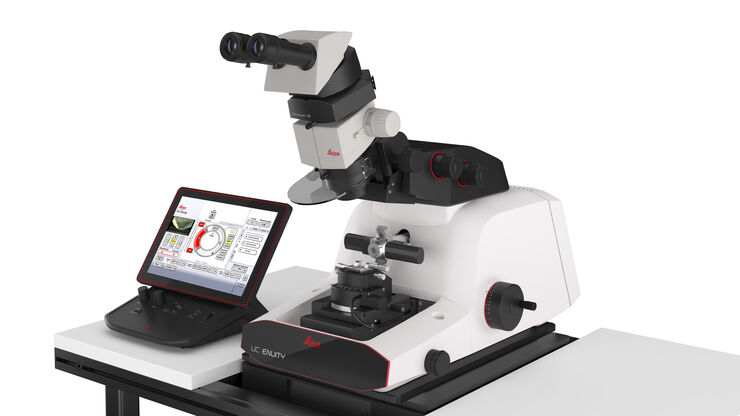
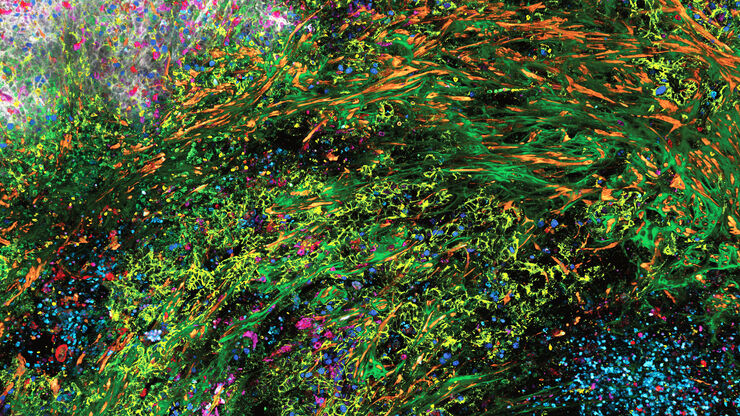
Laser Microdissection, also known as LMD or LCM (Laser Capture Microdissection), is a contact- and contamination-free method for isolating specific single cells or entire areas of tissue from a wide variety of tissue samples. The thickness, texture and preparation technique of the original tissue are relatively unimportant. The dissectate is then available for further molecular biological methods such as PCR, real-time PCR, proteomics and other analytical techniques. Laser microdissection is now used in a large number of research fields, e.g. neurology, cancer research, plant analysis, forensics or climate research. The method is meanwhile also applied for manipulation of cell cultures or for microengraving of coverslips.
Download the latest application notes:
LMD Comparative Genome Hybridisation
Related Topics
-
Article20. May 2012 Institute: Leica Microsystems, Wetzlar, GermanyThis monthly updated reference list demonstrates the major application fields for laser microdissection in life science research. Read article
-
Article22. Feb 2012 Institutes: National Research Council (CNR), Neuroscience Institute, Pisa, Italy, University of Trento, Centre for Integrative Biology (CIBIO), High Throughput-High Content Screening and Microarray Facilities, Italy, Royal College of Surgeons (RCSI), Department of Physiology, Dublin, Ireland, University of Trento, Centre for Integrative Biology (CIBIO), Laboratory of Molecular Neuropathology, Italy, University of Trento, Centre for Integrative Biology (CIBIO), Laboratory of Developmental Neurobiology, ItalyDifferent areas of the Central Nervous System (CNS) display a specific and selective gene expression profile. Here, we used the Laser Microdissection system Leica LMD6500 to study region-specific mRNA expression in the adult mouse retina and hippocampus. Read article
-
Tutorial15. Dec 2011 Institute: Justus Liebig University Gießen, Department of Agricultural Sciences, Nutritional Sciences and Environmental Management, Gießen, GermanyThere are many different types of consumables for laser microdissection instruments. They cover a wide range of applications from basic to highly specialized, enabling scientists to choose their own individual configuration whatever their field of research is.… Read article
-
Tutorial02. Dec 2011 Institute: Allen Instutite for Brain Science, Seattle, WA, USAHow can we begin to understand the complexity of the human brain and the way it works? The same way we begin to understand a city: by making a map. In this talk, Allan Jones shows how his team is mapping which genes are turned on in each tiny region, and how it all connects up. Read article
-
Tutorial07. Oct 2011 Institute: Justus Liebig University Gießen, Department of Agricultural Sciences, Nutritional Sciences and Environmental Management, Gießen, GermanyMany of the discoveries that are now being made in cell division and differentiation, the relationships between single cells and cell organelles, treatments of cells with pharmaceutic substances, etc. would not be possible without live cell cultures. Allowing morphological and biochemical… Read article
-
Tutorial28. Jun 2011 Institute: Justus Liebig University Gießen, Department of Agricultural Sciences, Nutritional Sciences and Environmental Management, Gießen, GermanyLaser microdissection is a highly selective process for preparing samples for DNA, RNA and protein analysis. It is a microscope-controlled manipulation technique for the precise separation of samples and tissue using a focused laser beam. Read article
-
Tutorial27. Jun 2011 Institute: Justus Liebig University Gießen, Department of Agricultural Sciences, Nutritional Sciences and Environmental Management, Gießen, GermanyLaser microdissection and laser micromanipulation are suitable for gaining a differentiated insight into the function of genes and proteins, and are used for a wide range of applications in neurobiology and immunology as well as in the developmental and cell biology of animal and plant organisms. Read article
-
Article13. Apr 2011 Institute: Leica Microsystems, Wetzlar, GermanyLaser dissection is used in a large number of research fields, e.g. neurology, cancer research, plant analysis. Here, user report on the research results they have attained by using laser microdissection. Read article
-
Article02. Nov 2010 Institutes: LabScience Communications, Grafing, Germany, University of Ulm, Institute of Applied Physiology, GermanyA characteristic sign of M. Parkinson is the deterioration of dopaminergic neurons in the mid-brain, specifically in the substantia nigra (SN, black substance). Different causes and forms of this disease have been identified. In the case of the genetic familial form, for example, it has been… Read article
-
Article07. Sep 2009 Institutes: Leica Microsystems, Wetzlar, Germany, University of Munich, Neurological Hospital, GermanyWhy do we grow old? Research scientists have been looking for an answer to this question for many years – particularly against the background of the increase in neurodegenerative diseases among older people such as Morbus Parkinson. Read article
Useful Links
Publication List
LMD reference list for major application fields in life science research
Communities and Web Sources
www.researchgate.net/
Social network for scientists
bitesizebio.com
Online magazine and community for molecular and cell biology researchers
www.somersault1824.com
Resource for high-end scientific illustrations, images and animations
Search Engines and Data Bases
www.cellimagelibrary.org
Public resource database of images, videos, and animations of cells
harvester.fzk.de/harvester
Bioinformatic meta search engine for genes and proteins
www.gopubmed.com
Search interface for pubmed
en.wikipedia.org/wiki/List_of_academic_databases_and_search_engines
List of academic databases and search engines
scholar.google.com
Beta of Google's search engine for scientific article abstracts
Journals
www.doaj.org/
Directory of open access journals
www.lifescied.org
CBE-Life Sciences Education – an ASCB online journal
www.sciencemag.org/
Science
www.nature.com/
Nature
www.cell.com/
Biweekly publication of exceptional research articles
jcs.biologists.org/
Journal of Cell Science
dev.biologists.org/
Development
jeb.biologists.org/
The Journal of Experimental Biology
dmm.biologists.org/
DMM Disease Models & Mechanisms
www.biotechniques.com/
International Journal of Life Science Methods
www.opticsinfobase.org/
Collection of Journals and Proceedings in Optics and Photonics
spie.org/x576.xml
SPIE - peer-reviewed journals on applied research in optics and photonics
http://onlinelibrary.wiley.com/journal/10.1002/(ISSN)1864-0648
Journal of Biophotonics
www.plosone.org/home.action
International, peer-reviewed, open-access, online publication
rspb.royalsocietypublishing.org/
Proceedings B - the Royal Society's biological research journal
www.microscopy-analysis.com/
International Journal for microscopists
www.optoiq.com/index/biophotonics/biomedical-imaging/bow-microscopy.html
News and features on biomedical microscopy
Organizations
www.microscopy.org/
Microscopy Society of America
www.eurmicsoc.org/
European Microscopy Society
www.rms.org.uk/
Royal Microscopical Society
www.ascb.org/
ASCB American Society of Cell Biology
www.biologists.com/cob_activities.html
the company of biologists
Your bookmarks are missing?
Please send us your useful links!