
Basics in Microscopy

Basic knowledge in optics and contrasting methods is fundamental for microscopic imaging. Setting up correct Koehler illumination improves image quality – the base for further image analysis. Within light microscopy we differentiate between stained and unstained samples influencing the amplitude and the phase of the light waves traversing the sample. For the human eye, differences in the amplitude are visible as brightness differences. Contrasting methods like phase contrast, modulation contrast, differential interference contrast, often used in living samples, convert phase shifts into intensity. Staining and fluorescence techniques, like immunofluorescence or the use of fluorescent proteins, are used to make selected structures or proteins visible.
-
Article16. Apr 2012 Institutes: VIB Center for the Biology of Disease, Katholieke Universiteit Leuven, Center for Human Genetics, somersault18:24One of the crucial tasks of a research scientist is reporting and communicating about his work. This is vital for cutting edge research; it is crucial to gain insights from other experts, to get a discussion going, to improve, to be able to get some funding, to convince other colleagues that your… Read article
-
Tutorial10. Apr 2012There are a lot of light-emitting processes occurring in nature. Luminescence is an umbrella term for those kinds of events where light emission is not the result of high temperatures. This article depicts the different forms of luminescences and goes into detail in the case of fluorescence.… Read article
-
Article01. Mar 2012 Institutes: SANITIZED AG, Burgdorf, Switzerland, Leica Microsystems, Wetzlar, GermanyBacteria are part of our world. There are countless numbers of them in the human body and they are completely harmless. But in people with a weak immune system or at the wrong place they can cause serious illness. Educational microscopes that pass through many hands are potential breeding grounds… Read article
-
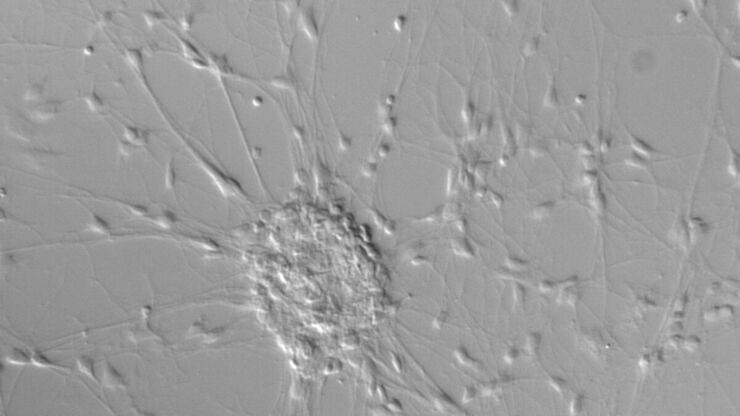
Tutorial30. Jan 2012 Institute: Leica Microsystems, Wetzlar, GermanyThe examination of live unstained biological specimens often suffers from poor contrast and therefore bad visibility of the specimen. Thick specimens in particular, such as brain slices, show up as nothing more than light grey structures instead of single cells. This tutorial explains the optical… Read article
-
Tutorial27. Jan 2012 Institute: Leica Microsystems, Wetzlar, GermanyStereo microscopes are often nicknamed the workhorse of the lab or the production department. Users spend many hours behind the ocular inspecting, observing, documenting or dissecting samples. Which factors need to be considered when selecting... Read article
-
Tutorial10. Jun 2011 Institute: Philipps University Marburg, Institute of Cytobiology and Cytopathology, GermanyOptical contrast methods give the potential to easily examine living and colorless specimens. Different microscopic techniques aim to change phase shifts caused by the interaction of light with the specimen into amplitude shifts that are visible to the human eye as differences in brightness. Read article
-
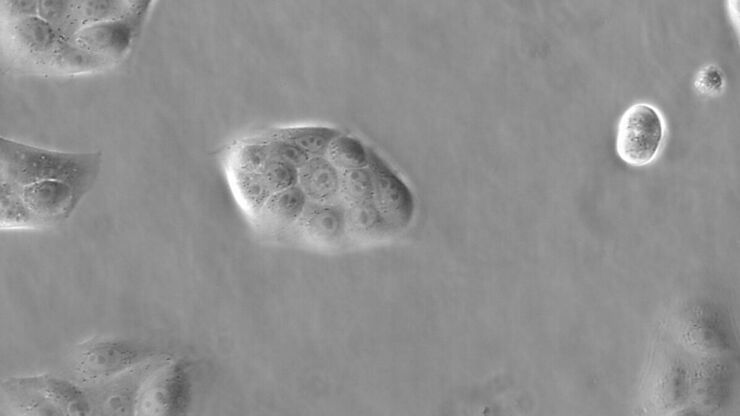
Tutorial09. Jun 2011 Institute: Philipps University Marburg, Institute of Cytobiology and Cytopathology, GermanyPhase contrast is an optical contrast technique for making unstained phase objects (e.g. flat cells) visible under the light microscope. Cells that appear inconspicuous and transparent in brightfield can be viewed in high contrast and rich detail using phase contrast microscopy. Read article
-
Tutorial07. Jun 2011 Institute: Philipps University Marburg, Institute of Cytobiology and Cytopathology, GermanyDifferential interference contrast (DIC) microscopy is a good alternative to brightfield microscopy for gaining proper images of unstained specimens that often only provide a weak image in brightfield. Read article
-
Tutorial01. Jun 2011 Institute: Leica Microsystems, Wetzlar, GermanyHoffman modulation contrast has established itself as a standard for the observation of unstained, low-contrast biological specimens. The integration of the modulator in the beam path of themodern inverted microscopes allows a wide range of brightfield or phase objectives to be used, rather than a… Read article
-
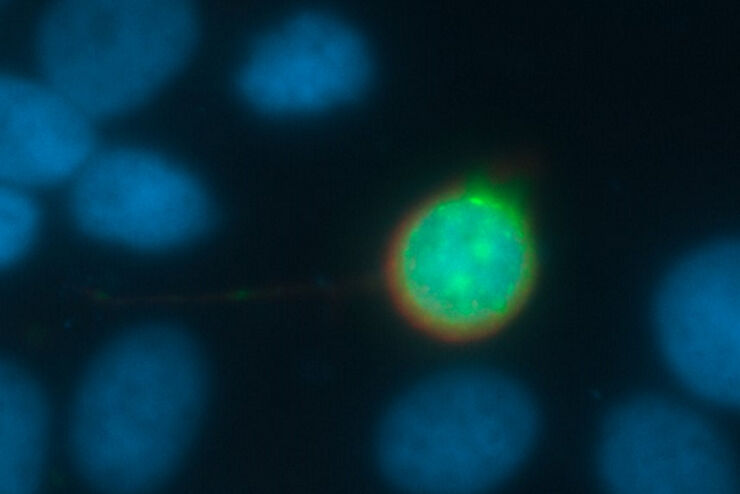
Tutorial31. May 2011 Institute: Philipps University Marburg, Institute of Cytobiology and Cytopathology, GermanyFluorescence is widely used in microscopy and an important tool for observing the distribution of specific molecules. Most molecules in cells do not fluoresce. They therefore have to be marked with fluorescing molecules called fluorochromes. Read article
-
Tutorial31. May 2011 Institute: Leica Microsystems, Wetzlar, GermanyThis tutorial demonstrates the basic steps for setting up a correct illumination of specimen with transmitted (and reflected) light. Read article
-
Tutorial30. May 2011 Institute: Philipps University Marburg, Institute of Cytobiology and Cytopathology, GermanyMolecules and atoms can exist in different quantum states. These states are dedicated to different energy levels; the quantum state with the lowest energy is called the ground state. Every state of greater energy is an excited state of the quantum mechanical system. Electrons can be excited by an… Read article
- 1
- 2
Useful Links
Don't miss our interactive tutorials
Differential Interference Contrast
Communities and Web Sources
www.researchgate.net/
Social network for scientists
bitesizebio.com
Online magazine and community for molecular and cell biology researchers
www.somersault1824.com
Resource for high-end scientific illustrations, images and animations
Search Engines and Data Bases
www.cellimagelibrary.org
Public resource database of images, videos, and animations of cells
harvester.fzk.de/harvester
Bioinformatic meta search engine for genes and proteins
www.gopubmed.com
Search interface for pubmed
en.wikipedia.org/wiki/List_of_academic_databases_and_search_engines
List of academic databases and search engines
scholar.google.com
Beta of Google's search engine for scientific article abstracts
Journals
www.doaj.org/
Directory of open access journals
www.lifescied.org
CBE-Life Sciences Education – an ASCB online journal
www.sciencemag.org/
Science
www.nature.com/
Nature
www.cell.com/
Biweekly publication of exceptional research articles
jcs.biologists.org/
Journal of Cell Science
dev.biologists.org/
Development
jeb.biologists.org/
The Journal of Experimental Biology
dmm.biologists.org/
DMM Disease Models & Mechanisms
www.biotechniques.com/
International Journal of Life Science Methods
www.opticsinfobase.org/
Collection of Journals and Proceedings in Optics and Photonics
spie.org/x576.xml
SPIE - peer-reviewed journals on applied research in optics and photonics
http://onlinelibrary.wiley.com/journal/10.1002/(ISSN)1864-0648
Journal of Biophotonics
www.plosone.org/home.action
International, peer-reviewed, open-access, online publication
rspb.royalsocietypublishing.org/
Proceedings B - the Royal Society's biological research journal
www.microscopy-analysis.com/
International Journal for microscopists
www.optoiq.com/index/biophotonics/biomedical-imaging/bow-microscopy.html
News and features on biomedical microscopy
Organizations / Institutes
www.microscopy.org/
Microscopy Society of America
www.eurmicsoc.org/
European Microscopy Society
www.rms.org.uk/
Royal Microscopical Society
http://www.doitpoms.ac.uk
Tutorials on microscopy for materials science; University of Cambridge, Department of Materials Science and Metallurgy
www.ascb.org/
ASCB American Society of Cell Biology
www.biologists.com/cob_activities.html
the company of biologists
Your bookmarks are missing?
Please send us your useful links!