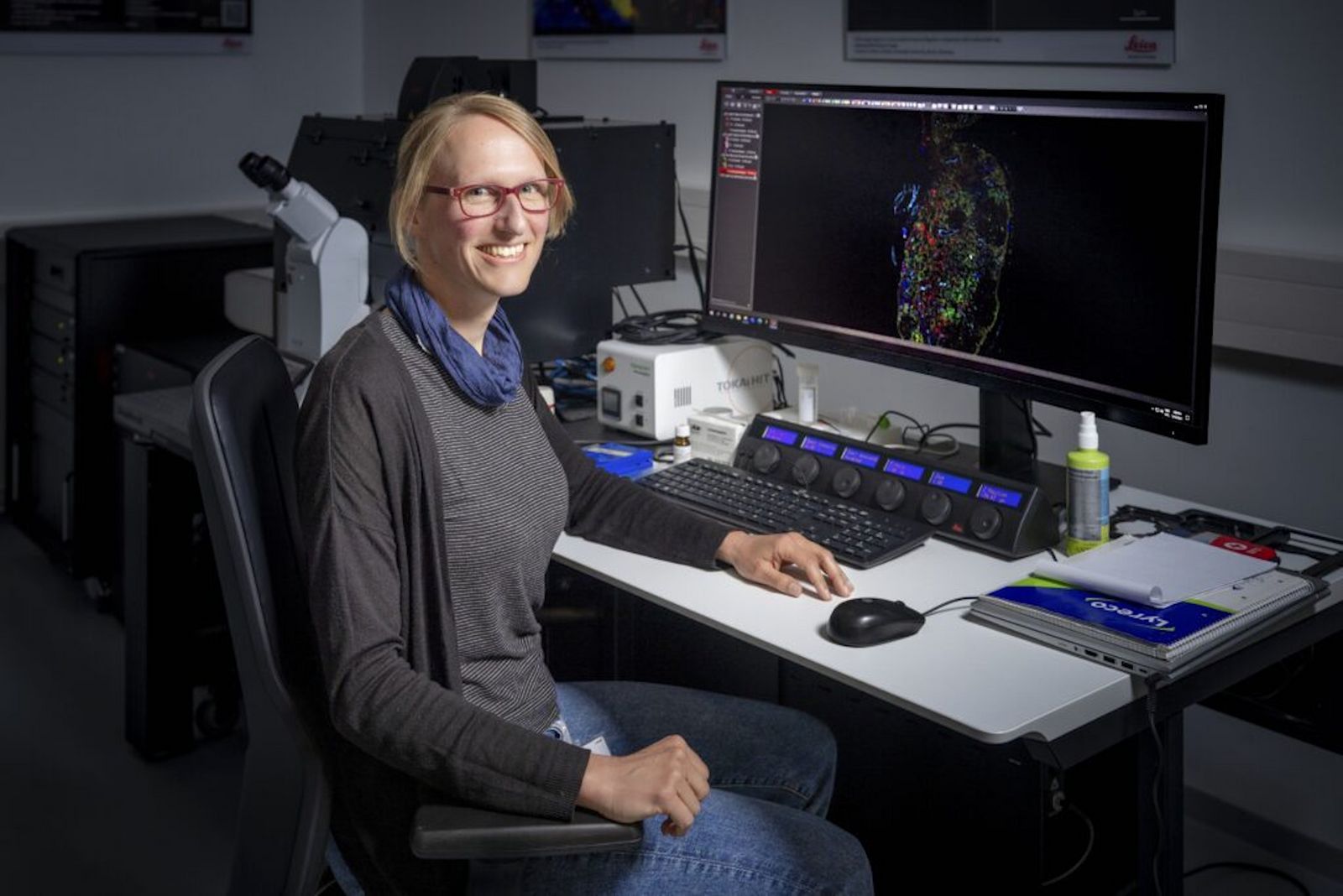

Dr. Sarah Hofmann, a postdoctoral researcher at the Medical Faculty Mannheim of Heidelberg University in Germany, is working towards achieving breakthroughs for understanding cancer. She is taking advantage of the STELLARIS multiplex imaging platform and Aivia AI image analysis software at the EMBL Imaging Centre (EMBL IC) in Heidelberg, Germany. Her research work has been made possible thanks to the CanSERV funding initiative.
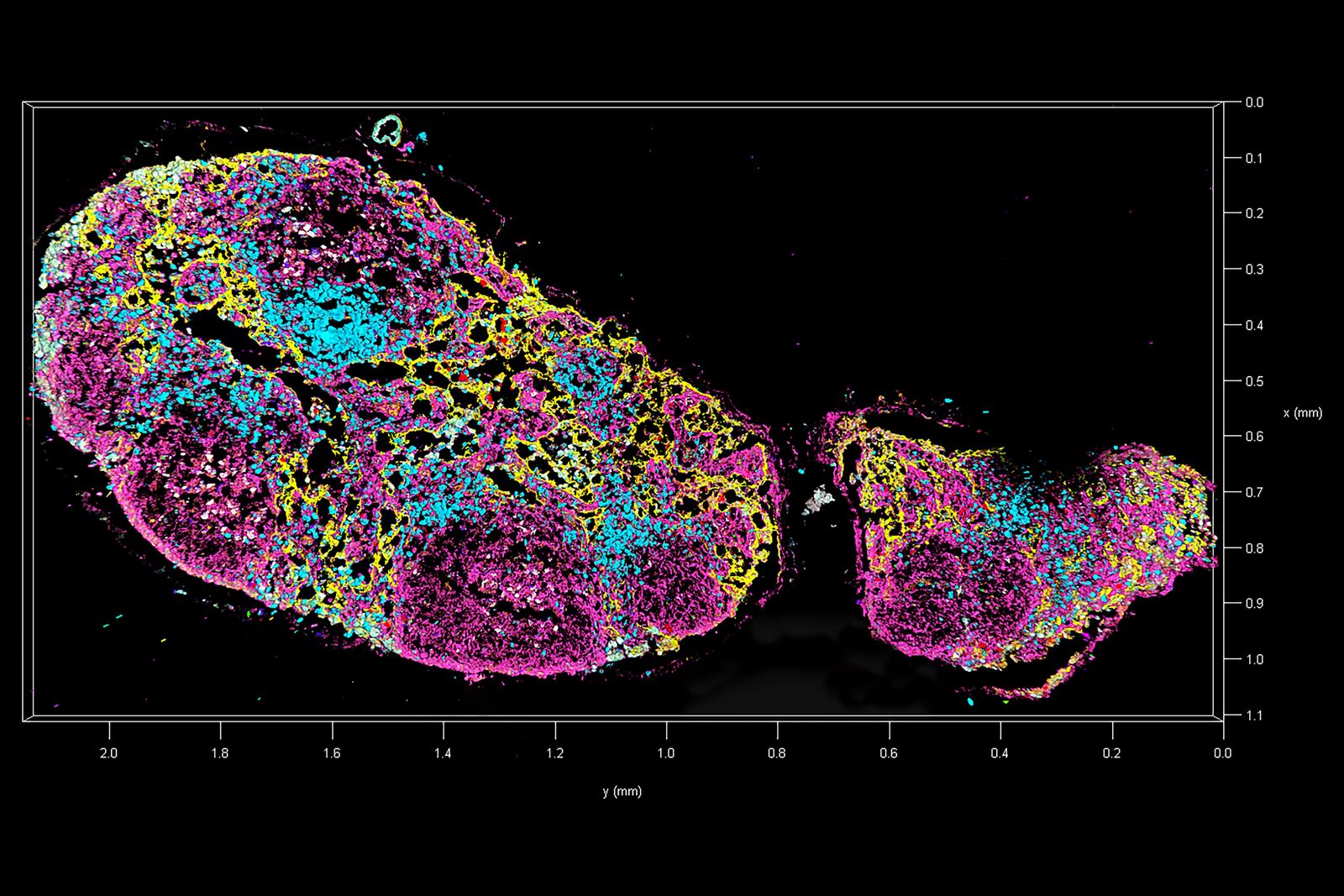
Dr. Hofmann’s research focuses on immune responses in lymph nodes, particularly in tumor-draining environments. It relies on the STELLARIS multiplex system’s ability to visualize 15+ biomarkers simultaneously and the fact that the Aivia software can help analyze many images rapidly and accurately. Her project investigates how lymphatic endothelial cells interact with immune cells in both healthy and cancer-affected lymph nodes. These interactions are critical for understanding tumor immunity and the effectiveness of immunotherapies. Using well-characterized mouse models of melanoma, her work aims to map the spatial organization of immune cell subtypes, including rare populations like innate lymphoid cells, within the lymphatic system.
The SpectraPlex functionality provides high-resolution and -multiplex imaging for gathering high-quality data from experiments. Additionally efficient, precise data analysis is done with the Aivia software. These capabilities can help advance the understanding of cancer-related immune mechanisms. In a previous role as an applications specialist at Leica Microsystems, Dr. Hofmann became familiar with the effectiveness of multiplexing techniques and AI-aided image analysis. After identifying EMBL IC as a suitable facility, she applied for CanSERV funding and received support from the Euro-BioImaging team throughout the application and review process.
Since beginning her work at EMBL IC, Dr. Hofmann has acquired images of specimens and analyzed them with technical support from both Leica and EMBL experts. She notes that access to the STELLARIS system and use of the Aivia software has been essential for her research progress.
SpectraPlex for STELLARIS is a comprehensive solution for 3D high-multiplex imaging in spatial biology. It facilitates new insights into cellular organization, interactions, and spatial phenotyping, whether for cancer research, immunology, or neuroscience. The Aivia AI Image analysis software enables a complete analysis workflow from accurate deep-learning based cell segmentation to automatic phenotyping and data exploration for 3D multiplexed images.
For more information, please visit:
or