
Visualization is central to ENT cancer reconstructive procedure, directly influencing surgical success and team efficiency. Precise vascular assessment is essential for reconstructive success, as the survival of free flaps depends on the patency and integrity of the microvascular anastomosis; clinical studies confirm that vigilant monitoring can increase flap survival rates to over 95% [1]. Ergonomic comfort is also a key consideration, as long procedures can lead to surgeon fatigue and headaches, which negatively affect performance and patient safety; research indicates that up to 76% of otolaryngologists report musculoskeletal pain annually [2].
Why visualization matters in reconstructive surgery
Surgeons specializing in head and neck reconstruction, especially for patients with ENT cancers, need to visualize intricate anatomical structures such as bone, muscle, mucosa, and teeth. The ability to see deeper into narrow cavities, maintain a bright and fully focused field, and avoid constant refocusing is critical for the surgical workflow.
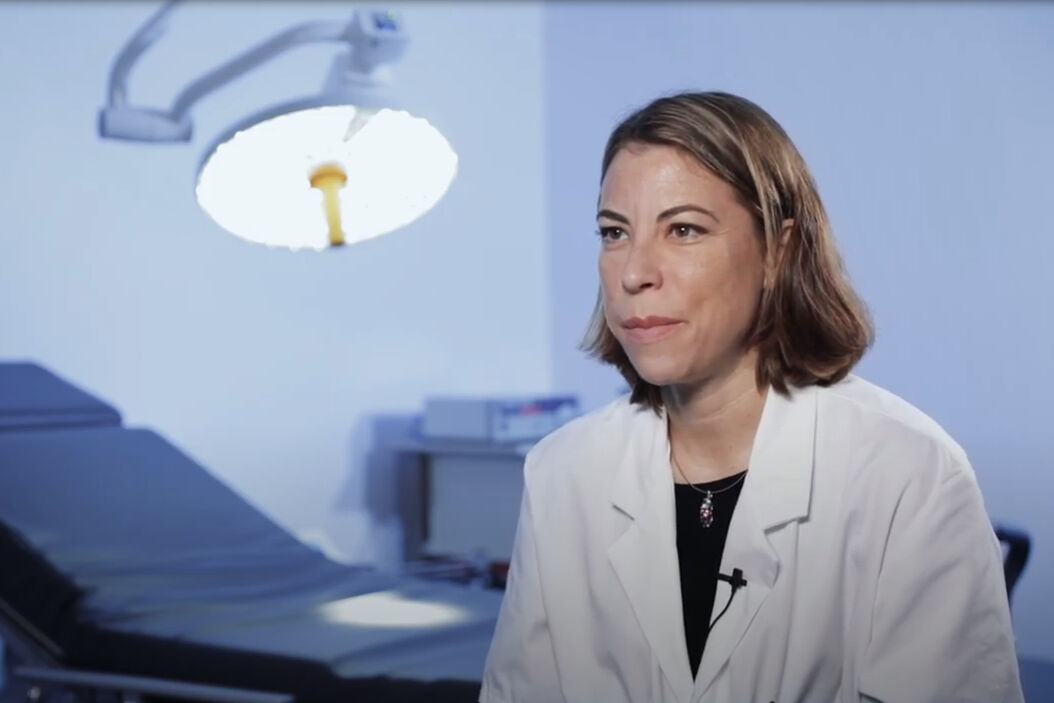
Key expert interview with Dr. Christine Bach, Foch Hospital, France
Dr. Christine Bach is a Plastic and Reconstructive Surgeon at the Foch Hospital in Suresnes, France. She specializes in head and neck surgery, performing reconstructive surgery on patients affected by ENT cancers.
Dr. Bach and her team use the PROvido surgical microscope, a multidisciplinary microscope allowing them to see more of the surgical area in one view. It provides a bright and fully-focused view deeper into narrow cavities. The PROvido operating microscope unites premium surgical optics with a responsive and stable floor stand.
In the below video, Dr. Bach explains the benefits of PROvido in plastic reconstructive surgery including ease of use, a good distribution of light and low heat generation. The microscope also allows the surgeon and her assistant to operate in a comfortable position. And all the OR staff can see the images, supporting communications and teaching. The scrub nurse also highlighted that the draping experience with the PROvido microscope is great which is critical step before surgery.
The PROvido Microscope: Designed for multidisciplinary microsurgery
The PROvido surgical microscope addresses these challenges with advanced features tailored for ENT and plastic and reconstructive procedures:
- Enhanced depth of field: FusionOptics technology unites an enhanced depth of field with high resolution, eliminating the need to constantly refocus and allowing surgeons to see critical structures clearly across varying depths.
- Illumination: The combination of 300 W xenon light and Small Angle Illumination (SAI) distributes light more evenly and reduces shadows deep into narrow channels, ensuring a bright, fully focused view deeper into confined surgical areas. And BrightCare Plus automatically adapts light intensity to the working distance for safer illumination with up to 60% light reduction.
- Ergonomics: The electromagnetic brakes and AC/BC balancing allow surgeons to effortlessly position the optics carrier at the required angle. The robust, full-metal stand ensures fast stabilization and remains exactly where needed.
- Real-Time Vascular Assessment: The FL800 ULT intraoperative video angiography module enables visual assessment of vessel patency using ICG fluorescence.
Transcript of the video
“From the first time I used this Leica microscope, it gave me a good impression. It is easy to set-up and the microscope is very light to use.
I’m Dr. Christine Bach and I’m a plastic surgeon specializing in head and neck surgery. I carry out reconstructive surgery for patients with ENT cancers by microsurgery.
Reconstructive surgery must be both functional and aesthetic. Functional because we are working with the upper aerodigestive tract and the patient must be able to talk, eat and breathe and we have to ensure a 3D reconstruction because we are working with bone, muscle, mucosa and the teeth. And just as importantly you have the aesthetics, this is because you are working on the face.
All of this makes reconstructive surgery very rewarding as I am trying to make a reconstruction that is as close to the original as possible. One thing that isn’t taken into account is that after performing microsurgery, your eyes are often sore and the team suffers from headaches. Here, this wasn’t the case. We used, I think, just 18% of the light, yet the operating field of view was good.
The thing I liked the best was that the microscope didn’t generate heat and therefore the flap didn’t heat up during the operation. With other microscopes, you have to apply compresses soaked in physiological serum and I believe the flap can suffer from that. Here it’s really an interesting advantage.
The head of the microscope is very easy to move and position. With the optics, especially for the surgeon assistant, it is simple to set and to incline, even for neck surgery, and finally this results in very comfortable positioning for all.
The buttons are easy to use: the zoom, the position changer. The camera used for viewing indocyanine green fluorescence was also easy to set up. During a particularly delicate operation today with difficult microvascular anastomoses, we felt well supported for this type of operation.
The operator and the other theater staff saw exactly what was happening with an image quality that was very close to what could be seen in the microscope, which is very useful. The possibility to take film and to take photos is also very interesting for teaching purposes.
Even the scrub nurse says that the cover was great. No but it’s important! [Comment from nurse: Yes, but it’s true, since you have never covered it].
The set-up and the fact that the microscope is easy to position, to adjust, is important and it’s true, when it is badly balanced, you press the button and the head of the microscope starts rocking, it is always, difficult. Here it’s easy to adjust, it’s something that does everything on its own, it’s true that it’s great.”
The statements of the healthcare professionals included in this presentation reflect only their opinion and personal experience. Not all products are approved or offered in every country. Please contact your Leica representative for more information.
References
Related Articles
-

Advances in Oncological Reconstructive Surgery
Decision making and patient care in oncological reconstructive surgery have considerably evolved in…
Feb 12, 2026Read article -
A Microvascular Surgeon’s View: How MyVeo Transforms Visualization
In this article, Dr. Andrew T. Huang, MD, FACS, otolaryngologist and a head and neck reconstructive…
Sep 08, 2025Read article -
The Guide to Augmented Reality in Microsurgery
In an era of technological advancement, Augmented Reality (AR) is rapidly transforming the medical…
Jun 16, 2025Read article


