
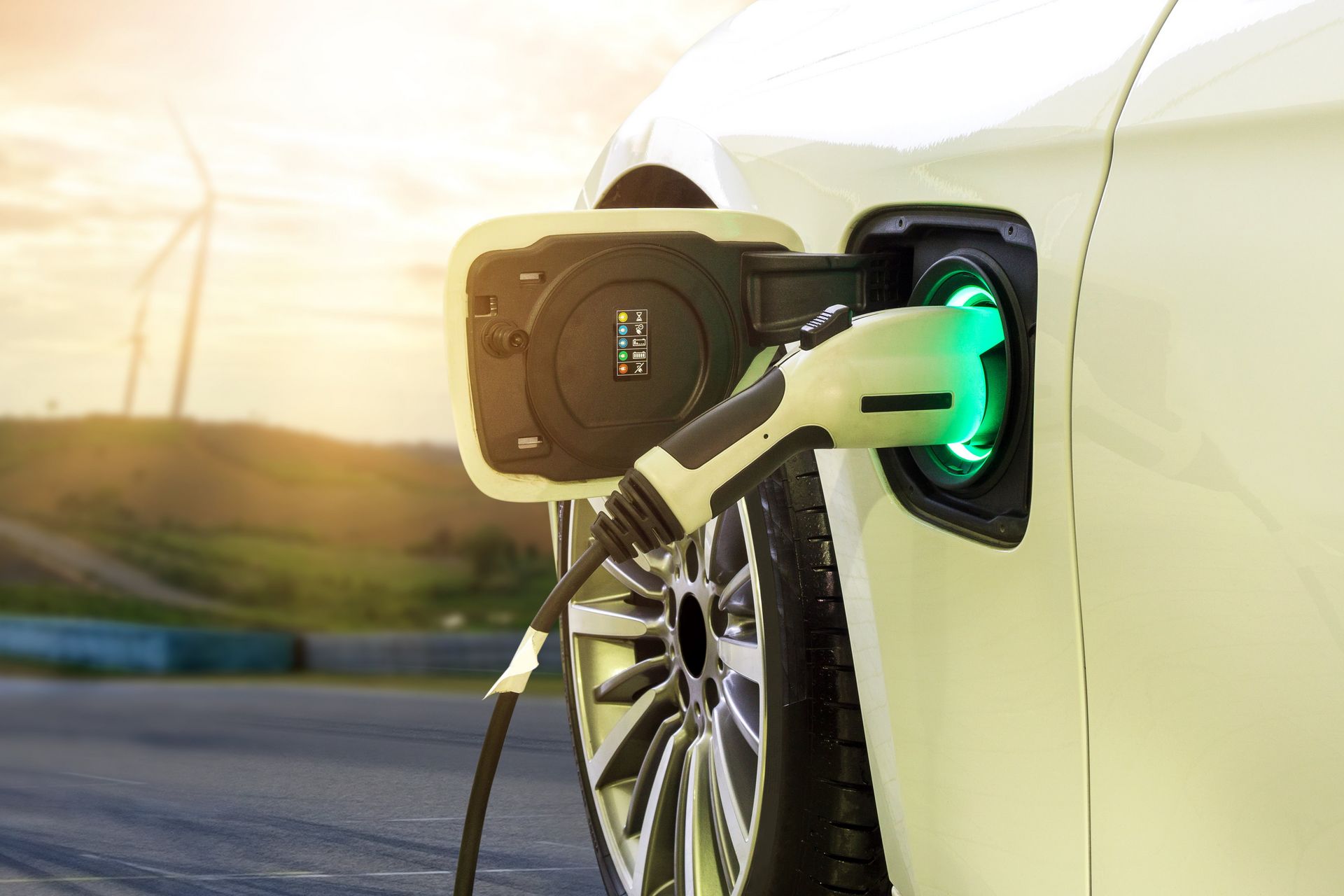
The automotive industry is changing, moving away from traditional engines towards alternative drive systems. As can be seen from the steadily growing demand for electric cars and innovative mobility solutions, the automotive industry and its consumers are focusing on the issue of sustainability. This free on-demand webinar is about the role of alternative fuel vehicles and why sustainable solutions are of increasing importance to the automotive industry.
Alternative Fuels and Why Sustainable Solutions are Important
On-demand webinar on the role of alternative fuel vehicles and why sustainable solutions are of increasing importance to the automotive industry
Summary
In this webinar, Dr. Till Gnann from the Fraunhofer Institute for Systems and Innovation Research speaks about the role of alternative fuel vehicles and why sustainable solutions are of increasing importance for the automotive industry.
The fastest path to lower transport emissions without sacrificing uptime is direct electrification wherever feasible. That’s the core finding of this webinar on the status quo and future of sustainable mobility.
Battery electric vehicles (BEVs) deliver the highest well to wheel efficiency with ~90% motor efficiency which is ~2× better than hydrogen fuel-cell-electric-vehicle (FCEV) pathways and ~4× better than synthetic fuels when including conversion losses. Hydrogen and e fuels still matter for aviation, shipping, and other hard to electrify modes where energy density is critical.
On market adoption, electric-vehicle (EV) sales scale with model availability and policy, not public chargers alone. Most charging already happens at home (~55%) and work (~26%) with only about 20% in public locations. The automotive industry should prioritize depot/home base charging, add smart load management, and the use of high power chargers for public infrastructure. Regulatory pressure from governments is decisive: for the European Union (EU) CO₂ fleet limits for newly sold cars are targeting ~0 g/km by 2035, forcing automakers to offer compelling EVs, while taxation aligned to the amount of CO₂ will further change the economics.
Energy system impact is manageable for passenger cars (~120 TWh by 2050 in Germany under an electricity focused pathway), but heavy duty vehicles, aviation, and maritime will require additional hydrogen/e fuels and significant renewable build out. The bottom line for the auto industry is first focus on electrifying light/medium vehicles, build charging stations where vehicles dwell, plan grid friendly operations, and track policy driven timelines to avoid stranded assets.
Key Learnings
- Learn more about technology alternatives to conventionally fueled vehicles and the difference in energy generation and supply.
- Get more information about the status quo of alternative fuel vehicles in Germany and worldwide.
- Understand the future market developments and their impact on the energy systems.
- Get an overview of the current subsidy programs of the countries.
Related Articles
-

Ensuring Glass Quality with the Polarization Microscopy Advantage
Glass is one of the oldest materials known. Today, it is used for many applications, e.g., optical…
Mar 23, 2026Read article -

Visualizing Photoresist Residue and Organic Contamination on Wafers
As the scale of integrated circuits (ICs) on semiconductors passes below 10 nm, efficient detection…
Mar 02, 2026Read article -

Safe Wafer Loading for Microscope Inspection without Hand Contact
How automated silicon wafer loading for microscope inspection helps improve microelectronics process…
Feb 19, 2026Read article


