One click away from the most relevant image information
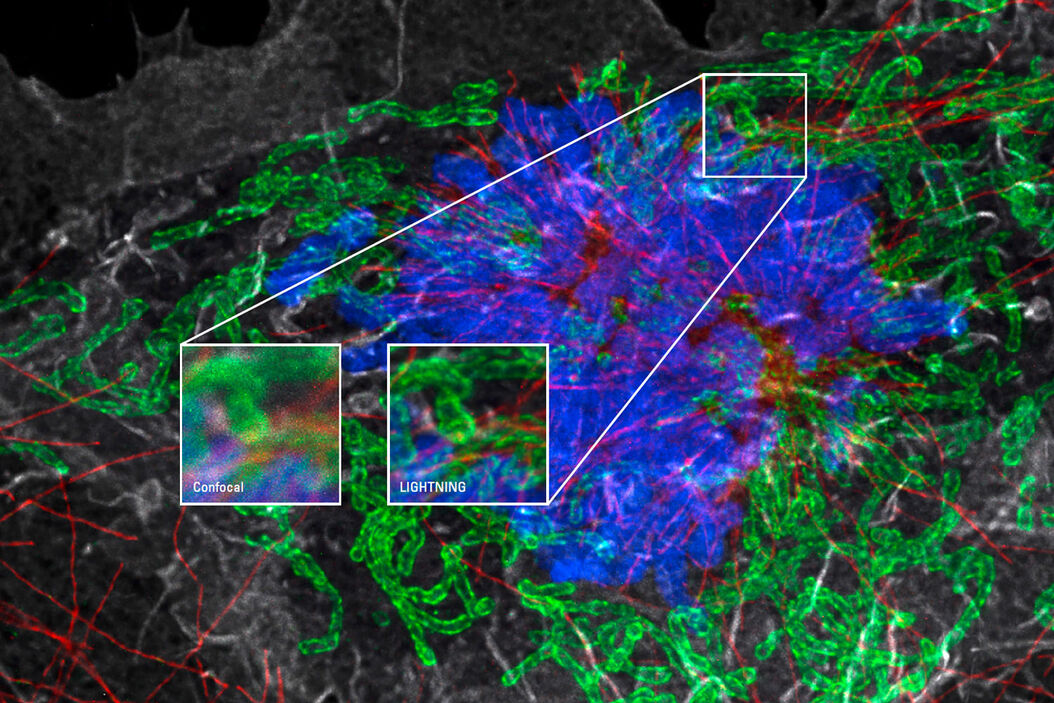
Microscopic images, even confocal images, contain more details than conventional acquisition methods can resolve. LIGHTNING enables you to reveal a lot more of the information present in your images. It is fully automated and can be used for imaging of any specimen and for any type of experiment.
LIGHTNING provides an unparalleled extraction of information from the image thanks to its adaptive image reconstruction, which works in (near) real time and 5D. While the usual image post-processing follows a one-way-fits-all strategy, LIGHTNING determines dynamically the quintessential information for every location in the image to achieve superior results.
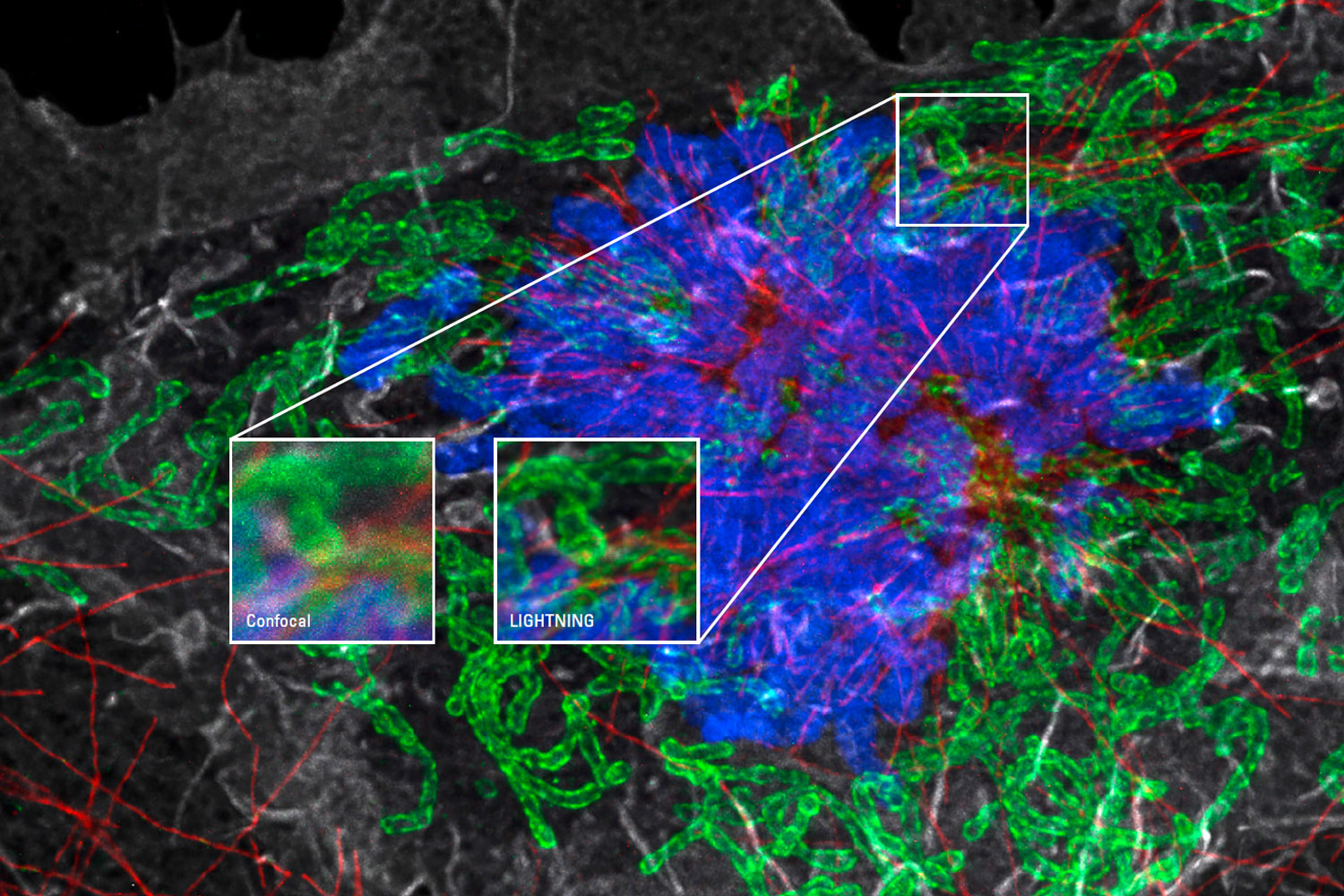
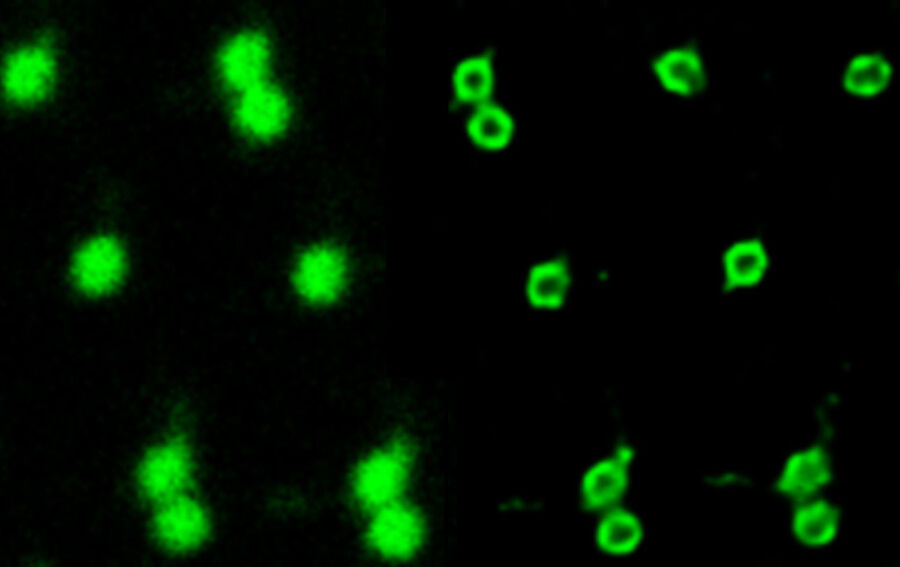
Confocal images acquired with LIGHTNING appear as if a layer of noise has been removed from them compared to what has been the standard so far. The resulting images reveal a clear and unobstructed view of the relevant information. In addition, LIGHTNING image information extraction extends the resolution of the STELLARIS confocal platform into super-resolution territory – nanostructures as small as 120 nm can be resolved.
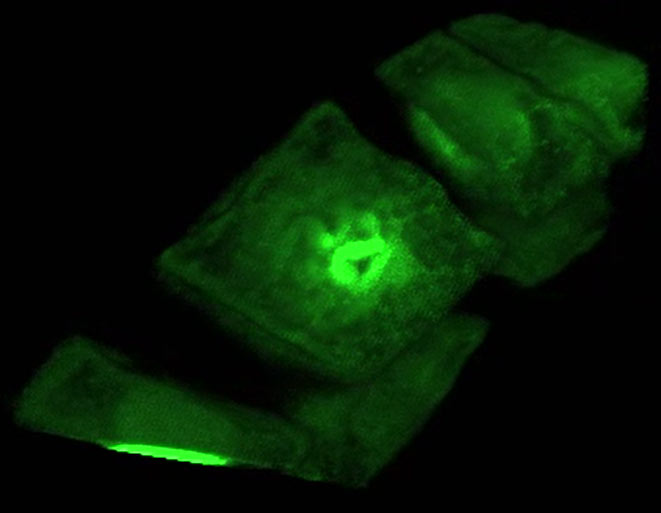
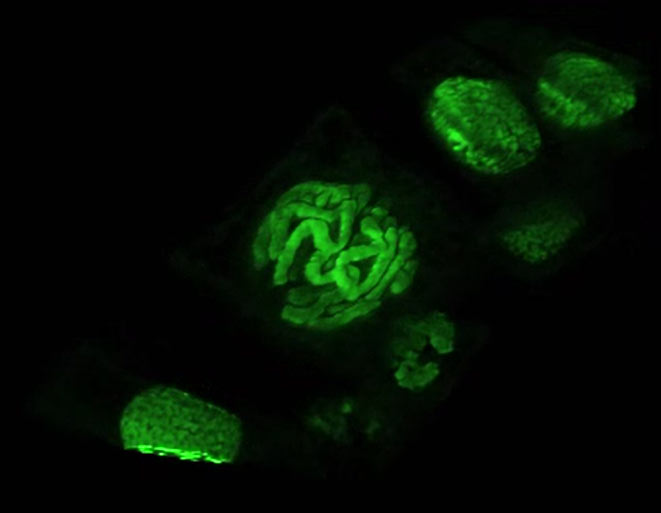
Slider Chromosomes
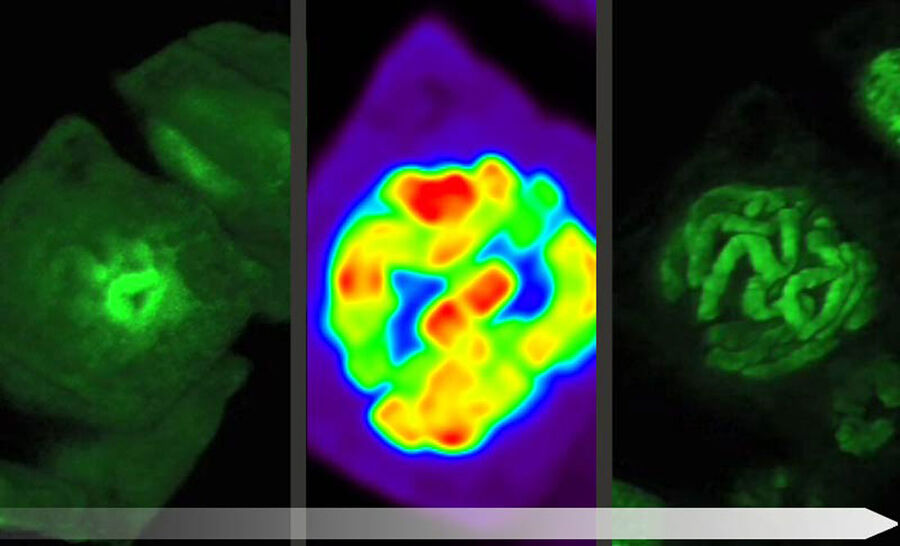
LIGHTNING decision mask
The LIGHTNING decision mask applies the best fitting reconstruction strategy for each specific volume element.
Different image quality measures are displayed in pseudo-colors ranging from purple (low image quality) to red (high image quality).
This constitutes the strong contrast to other, traditional methods that apply global effective reconstruction schemes.
Full integration into the online image acquisition
Using a smart combination of system parameters, image data, and optimized GPU processing, LIGHTNING uncovers important image information even when using ambitious imaging conditions. It allows you to get the most information even in cases with limited photon count and ultra-fast imaging.
The deep integration of LIGHTNING with the image acquisition process allows you to apply image restoration on the fly. You can feed the additional image information gained by LIGHTNING back into the acquisition parameter setup right away, thus saving time – get it right straightaway.
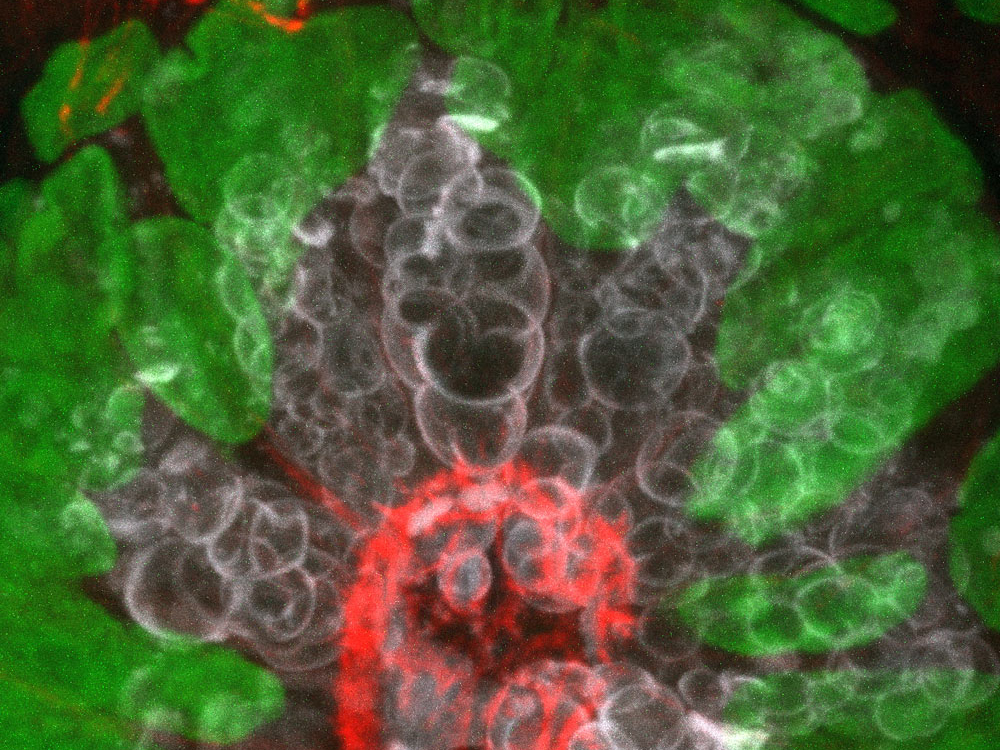
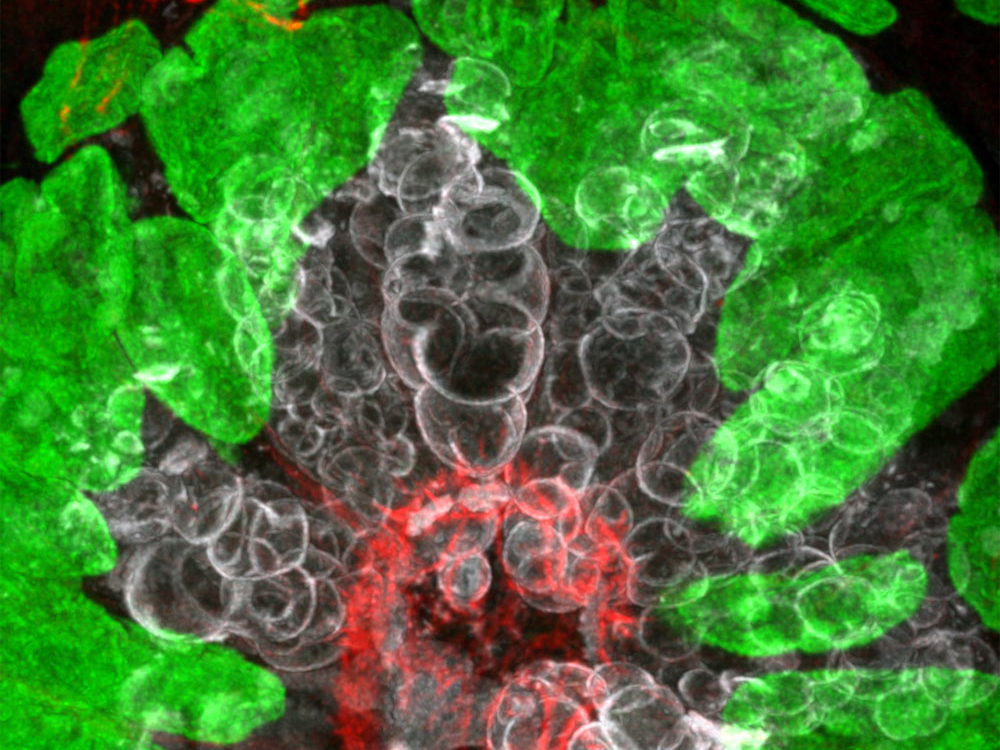
FluoCells mouse intestine section. Mucus of goblet cells, gray, Alexa Fluor 350 WGA. Nuclei, green, SYTOX Green. Filamentous actin, red, Alexa Fluor 568 phalloidin.
Multiple colors and super-resolution simultaneously
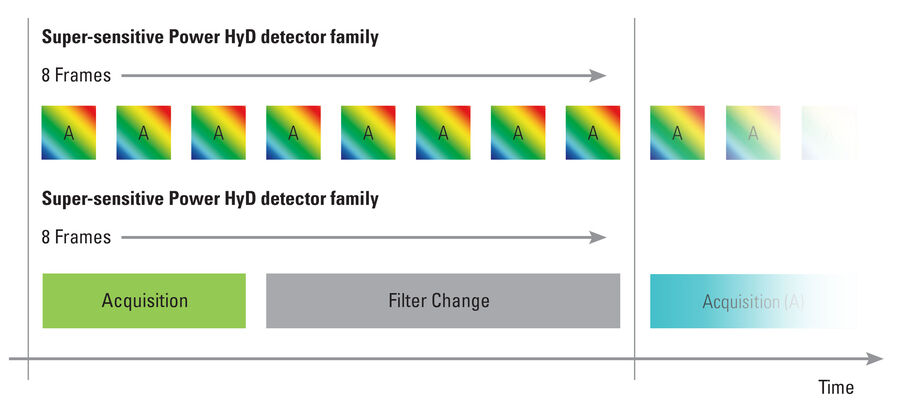
LIGHTNING allows multicolor super-resolution acquisition with high speed. The filter-free spectral detection system of the STELLARIS confocal platform can collect up to five channels simultaneously.
Multichannel acquisition allows much faster parallel data collection compared to solutions with only one super-resolution channel. You can acquire eight multicolor images with a STELLARIS microscope using LIGHTNING in the same time it takes single-detector solutions to produce only one single-color image.
No sacrifice between speed and resolution
Standard confocal systems sacrifice speed for resolution. LIGHTNING keeps the speed of image acquisition. The full framerate of the STELLARIS 8 system (12 kHz scanner: 40 fps @ 512 x 512 pixels) is maintained in all channels. Each channel offers super-resolution down to 120 nm. This setup is superior to those where only a single channel with super-resolution is combined with standard confocal channels, as it allows you to capture at the nanoscale dynamic events that occur even on the millisecond timescale. You can now observe cellular dynamics in great detail and with unprecedented sharpness.
Obtain more information from your experiment
Get images with a six times larger field of view, showing super-resolved structures and allowing the observation of molecular interactions and dynamics. Using LIGHTNING in the STELLARIS platform allows you to perform fast scanning and proper sampling over a specimen area at least six times larger than with any other current confocal system. It achieves this level of performance using high-speed resonant scanning with imaging formats of up to 2496 x 2496 pixels.
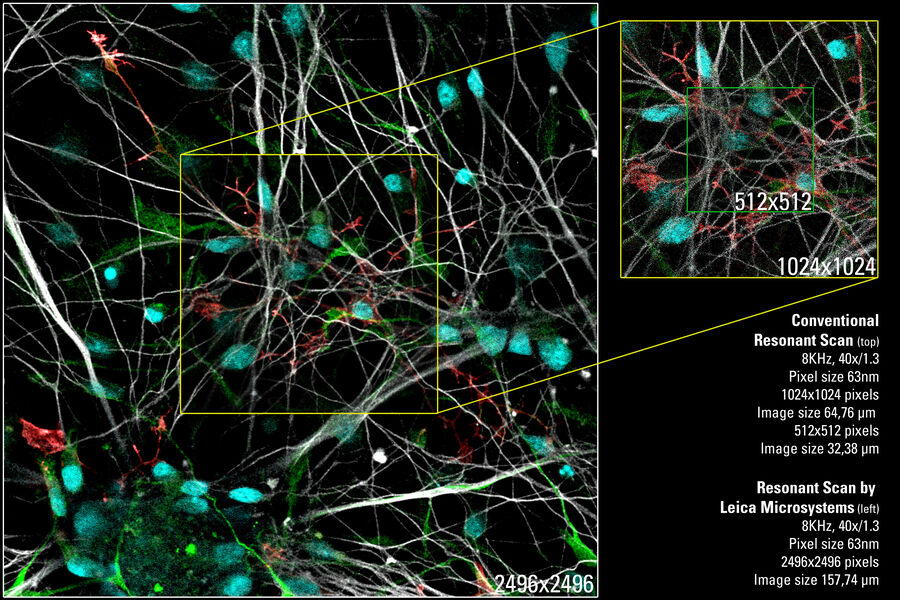
Reproducible results with optimal settings
Confocal imaging with LIGHTNING is based on adaptive intelligence technology which optimizes the image for every probed location in the specimen. The final set of parameters is stored with each image, so the imaging conditions are fully documented and, as a result, reproducible. You can be assured that information and insights extracted from LIGHTNING images meet your specific scientific requirements.
LIGHTNING is directly integrated into the STELLARIS platform and covers all confocal imaging modalities. This allows imaging with optimal resolution and speed. Set up all resolution-relevant parameters using one slider.
In addition, LIGHTNING offers:
- Integrated online image acquisition – no post-processing needed
- Management of large data sets created by time-lapse recording, Mark & Find, or Tile Scan
- Visualization of LIGHTNING 3D data with the LAS X 3D Viewer
- Analysis of LIGHTNING images with LAS X Quantify Tools
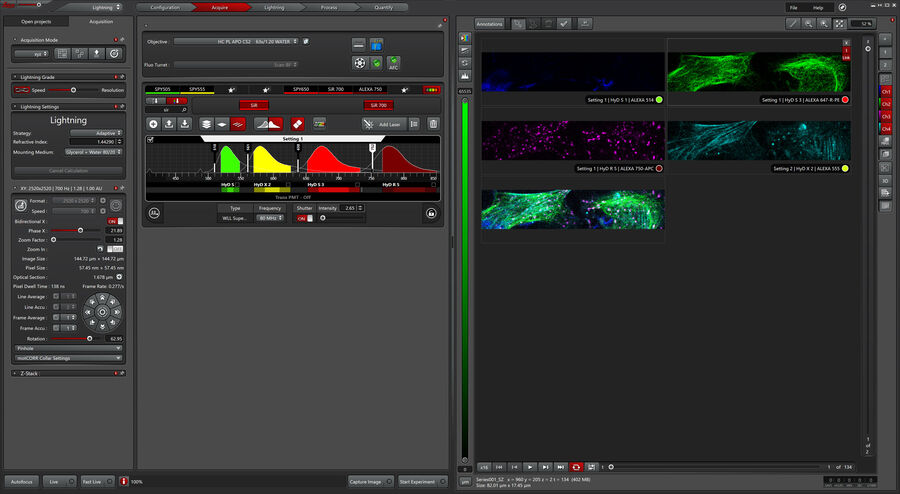
Capture image data on the fly
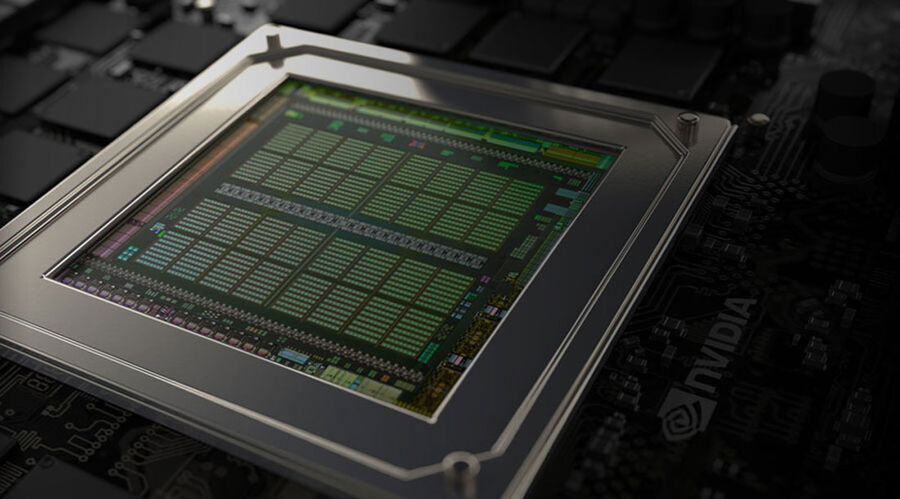
Integrated into the data acquisition stream, today’s GPUs take the LIGHTNING image information extraction to a new level when it comes to speed. LIGHTNING fully supports the NVIDIA CUDA platform which leverages the highly parallelized and system optimized computation on GPU.
You can benefit from the underlying constrained iterative approach for image reconstruction. Based upon optics principles, it is the correct way to reveal the information contained in your images – in an instant.