
The evolution of dental visualization tools
Historical context
In the early days of dentistry, practitioners relied solely on the naked eye to perform visual inspections and procedures. This limited visibility often led to diagnostic challenges and compromised precision. The introduction of dental loupes marked a transformative moment in clinical dentistry, enabling more precise work and helping clinicians address increasingly demanding restorative and endodontic cases. These wearable magnification tools allowed dentists to see fine details more clearly, improving accuracy during intricate procedures, such as cavity preparation, scaling, and
restorative work. With magnification levels typically ranging from 2.5x to 6x, loupes quickly became a standard in general dental practice.
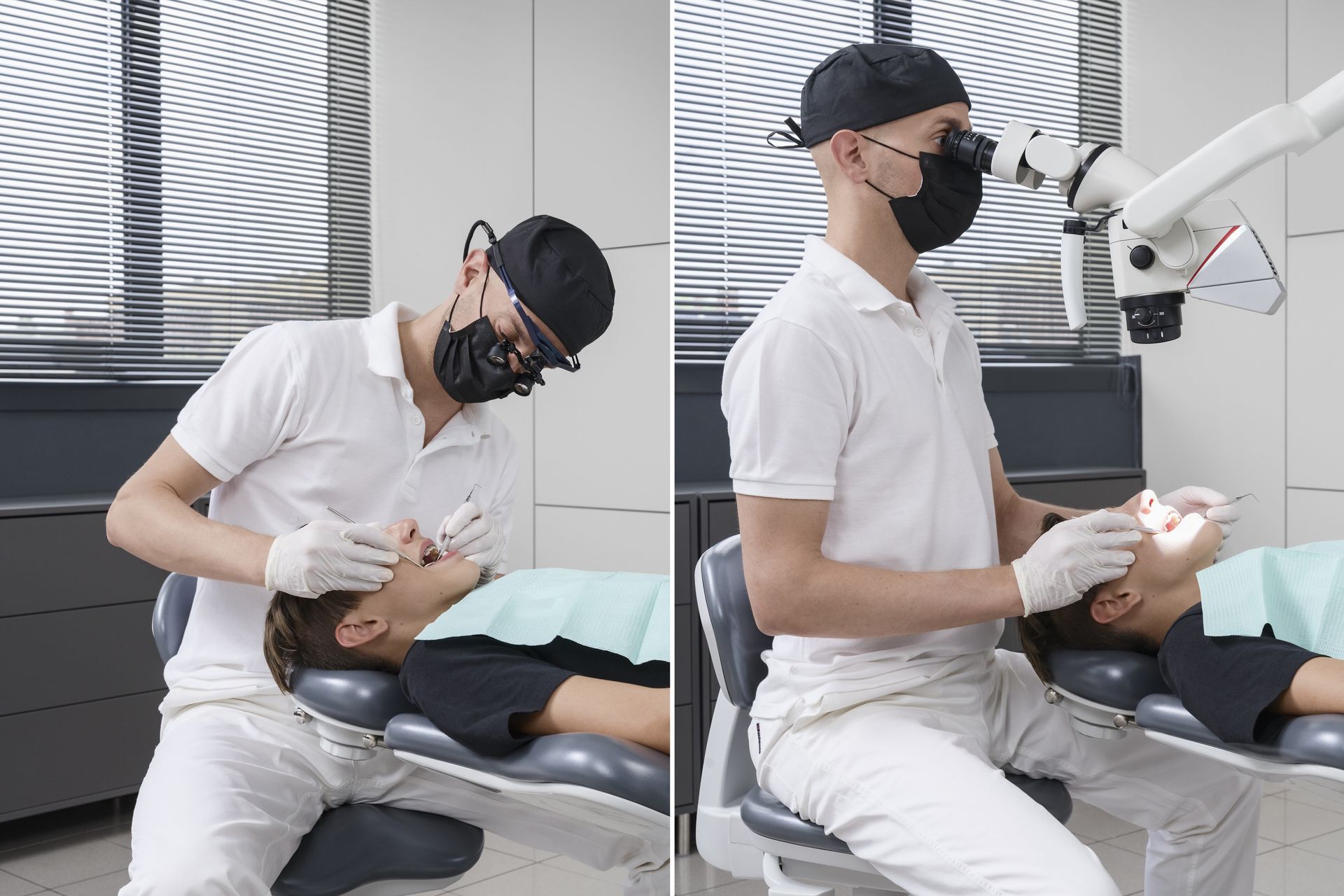
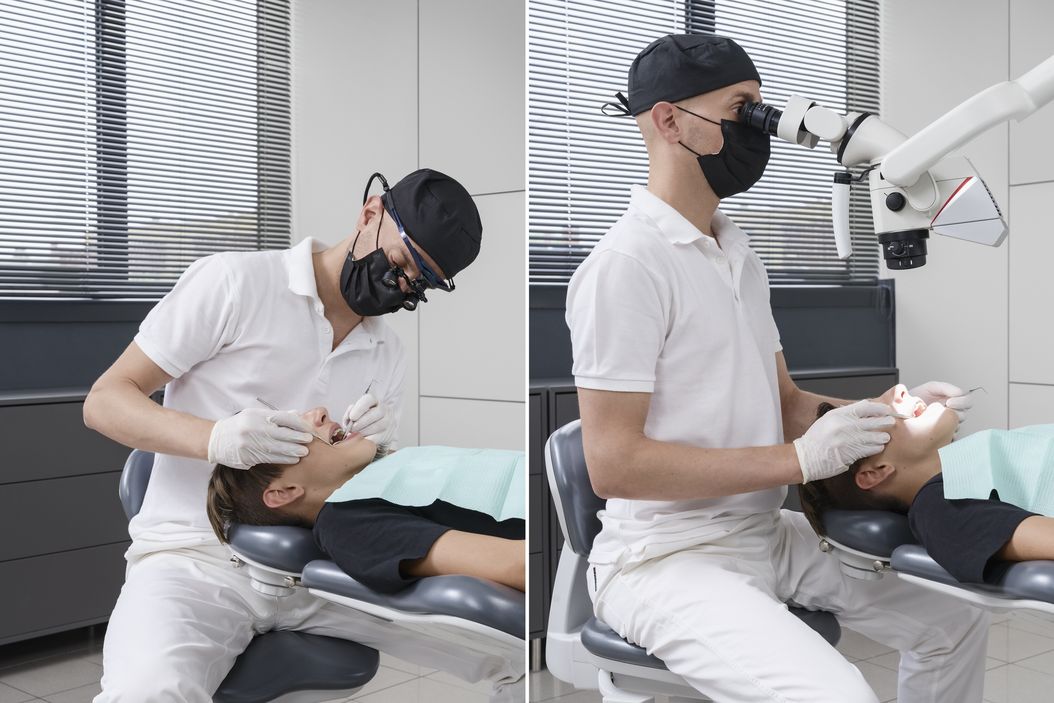
Beyond improved visibility, loupes also introduced a new awareness of ergonomics. Dentists began to recognize the importance of posture and neck alignment, as loupes encouraged a more forward-facing working position. However, certain limitations, such as a small range of focal lengths (working distances) and reduced magnification values, for complex procedures have remained.
The advent of microscopes in dentistry
Originally developed for medical surgery, dental microscopes gradually found their place in advanced dental practices [1-6]. These devices offer significantly higher magnification, ranging from 4x to over 25x, longer working distances (focal lengths), and a superior depth of field. They have been used for intricate procedures like endodontics, periodontal microsurgery, and prosthodontic precision work.
Microscopes not only enhance visual acuity, but also help dentists maintain an upright posture, reducing musculoskeletal strain during long procedures. Their integrated lighting systems provide shadow-free illumination and many models include built-in cameras for documentation and education.
Understanding dental loupes
What are dental loupes?
Dental loupes are head-mounted magnification devices, typically integrated into eyeglass frames or worn with a headband. Commonly offered maginifcation is in the ~2.5×–5.0× range, with lower magnification options around 2.0× available, and higher dental applications (e.g., endodontics) commonly using ~6×. Loupes are widely used in general dentistry, hygiene, and restorative work, making them a foundational tool for many dental practitioners [9,10].
Advantages of dental loupes | Limitations of dental loupes |
|---|---|
| Portability & accessibility: Loupes are lightweight, wearable, and easy to move between treatment rooms [8,11]. | Fixed Working Distance (Focal Length): Loupes have a limited working distance and depth of field which can restrict movement and visibility of deeper or more complex areas [7,9]. |
| Improved visibility: They enhance detail recognition for procedures like scaling, cavity preparation, and composite placement [12,13]. | Magnification Ceiling: While suitable for general procedures, loupes may not provide sufficient detail for advanced treatments like endodontics or microsurgery [7,9,11]. |
| Customizable fit: Dentists can choose between Galilean (lighter, simpler) and Prismatic (sharper, higher magnification) optics, as well as different frame styles, declination angles, and light sources [7,12,13]. | Ergonomic Dependency: The ergonomic benefits depend heavily on proper fitting. Poorly adjusted loupes can still lead to discomfort and long-term strain [9]. |
| Ergonomic benefits: When properly fitted, loupes promote better posture and reduce neck and back strain — especially with TTL (Through-The-Lens) designs [7,12,14-17]. | Limited Documentation Capability: Unlike microscopes, loupes typically require external or clip-on cameras for procedure documentation which may compromise image quality [18]. |
Understanding dental microscopes
What are dental microscopes?
Dental microscopes are advanced optical instruments designed to provide high-resolution, magnified views of the oral cavity. Unlike loupes, which are worn on the head, microscopes are mounted on a stand, wall, or ceiling and offer adjustable magnification ranging from 3x to over 40x. These tools are particularly valuable in procedures that demand precision, such as endodontics, periodontal microsurgery, and
prosthodontic restorations.
Advantages of microscopes | Limitations of microscopes |
|---|---|
| Superior magnification & detail: Microscopes reveal anatomical structures that are invisible to the naked eye or even eyes aided by loupes. This fact is especially critical in locating hidden canals, detecting microfractures, and performing delicate tissue work [19-21]. | Higher cost: Microscopes represent a significant investment, depending on features and brand [2,8,10]. |
| Enhanced ergonomics: By allowing dentists to maintain an upright posture and adjust viewing angles and focal lengths (working distances), microscopes help them reduce neck and back strain [8,22,23]. | Learning curve: Effective use requires training and adaptation [10,25]. However, many manufacturers offer onboarding programs and continuing education resources. |
| Integrated illumination: Most dental microscopes feature built-in LED or halogen lighting systems that deliver bright, shadow-free illumination significantly improving visibility [21,24]. | Operatory footprint: Microscopes require space and may need structural integration which can be a barrier for smaller practices [2]. |
| Documentation & education: Microscopes often include integrated cameras for high-quality photo and video capture. This ability enables real-time documentation, peer-to-peer learning and education, and the informing of patients. | |
| Clinical versatility: From root canal treatments to crown preparations and soft tissue surgeries, microscopes enhance precision across a wide range of dental disciplines. |
Clinical applications of dental magnification tools
Restorative dentistry
Precision is critical in restorative procedures, such as cavity preparations, composite placements, and crown fittings. Loupes enhance visibility for general restorative work and are widely used in daily practice. Microscopes help dentists to detect microfractures, marginal gaps, and cracks that may be missed with lower magnification [16,20].
Endodontics
Endodontic procedures demand high magnification and illumination to navigate complex root canal systems. Microscopes enable dentists to locate calcified canals, missed anatomy, and fractures, while improving cleaning, shaping, and obturation accuracy. Loupes may be used for simpler cases, but often lack the depth and resolution required for advanced endodontic treatments [8,20,21].
Periodontics
Periodontal surgeries require meticulous tissue handling and precise suturing. Microscopes offer enhanced visualization of soft tissues, allowing for more controlled incisions. Their integrated lighting systems reduce shadows and improve contrast [12,20].
Prosthodontics
In prosthodontics, accuracy in impression taking, prosthesis fitting, and margin evaluation ensure better outcomes and patient satisfaction. Microscopes help ensure that prosthetic components are seated correctly and margins are fully visible, reducing the risk of failure or discomfort. Loupes are commonly used for initial evaluations, but may not provide the level of detail needed for complex prosthetic work [20].
Case studies
Case study 1: Enhancing root canal success rates with microscopes
A retrospective cohort study published in ScienceDirect examined the effectiveness of microscope-assisted root canal treatments in permanent posterior teeth. The results showed a significant improvement in treatment outcomes when dental microscopes were used, particularly in locating hidden canals and ensuring complete debridement.Dentists using microscopes reported fewer retreatments and higher patient satisfaction due to improved precision and visibility.
Case study 2: Microscope use in endodontics improves long-term outcomes
Research published on ResearchGate highlights how dental operating microscopes contribute to higher success rates in endodontic procedures. The study emphasizes the role of magnification in identifying anatomical complexities and improving obturation quality.
According to Dr. Katia Greco, Endodontist, Maglie, Lecce, Italy:
For successful treatment I need as much information and detail as possible. I have worked with dental microscopes for 22 years—it really makes a big difference and helps to achieve better treatment results.
Dentists who have transitioned from loupes to microscopes often describe the shift as transformative — not only for their clinical outcomes but also for their physical well-being are in the following links:

Fig. 1: The Magnification Continuum showing the dentist working via the naked eye on the far left to eyeglasses, dental loupes, and finally the operating microscope on the far right. For the microscope case, note the improved posture (more neutral and balanced) of the dentist thanks to the longer working distance of the microscope, even with increasing levels of magnification.
Making the transition to dental microscopes
Training and education
Adopting a dental microscope involves a learning curve, but the right training can make the transition smooth and rewarding. Many microscope brands offer onboarding sessions, in-office demonstrations, and continuing education courses tailored to specific specialties such as endodontics and restorative dentistry, supporting clinicians as they integrate microscopy into their daily workflows.
Participating in live training events allows dentists to practice microscope positioning, patient alignment, and documentation techniques.
Webinars, video tutorials, and peer-shared case studies provide flexible learning options for busy clinicians.
Connecting with colleagues who have successfully integrated microscopes can offer practical tips and encouragement.
Integrating microscopes into daily practice
Successful integration depends on both clinical workflow and operatory setup. Dentists must ensure their treatment rooms can accommodate the microscope’s footprint. Wall-mounted or ceiling-mounted options can save space. Align the microscope with the dentist chair and patient position to maintain a natural posture and reduce strain.
Through training, dental assistants and hygienists must be familiar with microscope operation, patient positioning, and camera documentation.
Dentists can begin using the microscope for select procedures and expand as comfort and efficiency grow.
Overcoming Common Challenges
While microscopes are a significant investment, many dentists report a positive return on investment (ROI), including improved clinical outcomes, fewer retreatments, and enhanced reputation. Temporary slowdowns are normal during the learning phase. With practice, procedures often become faster and more precise. Patients may be intrigued or reassured by the advanced technology. Dentists can use this as an opportunity to educate and differentiate their practice.
The evolving role of the dentist
As visualization tools become more advanced, the role of the dentist evolves from manual technician to precision-guided clinician. Investing in high-performance magnification is not just about seeing things better — it’s about working smarter, reducing fatigue, and delivering superior care.
Conclusion
While dental loupes remain a reliable tool for many procedures, the advantages of dental microscopes — from magnification and ergonomics to documentation and innovation — make them a compelling choice for forward-thinking dentists. As technology advances, embracing these solutions will be key to staying competitive, improving outcomes, and elevating the patient experience.


