Introduction
Suppliers and manufacturers need to inspect parts and components in an efficient and cost-effective way. The goal is to ensure and optimize product performance and lifetime. Typical challenges that users may face for inspection and rework with a microscope are described in this article. Leica digital and stereo microscopes which can help users overcome these challenges, enabling the inspection workflow efficiency to be optimized, are also mentioned.
Challenges for Visual Inspection
Visual inspection of parts and components is most often performed with a digital or stereo microscope. When inspection only is required, then a digital microscope or microscope with camera is the most appropriate solution. If inspection with rework is needed, then a stereo microscope with eyepieces is normally used.
Inspection only and inspection with rework (digital microscope or microscope with camera)
A number of challenges encountered when doing visual inspection can lead to inefficiency in the workflow. Below are several common challenges that users may face.
Insufficient optical performance and illumination
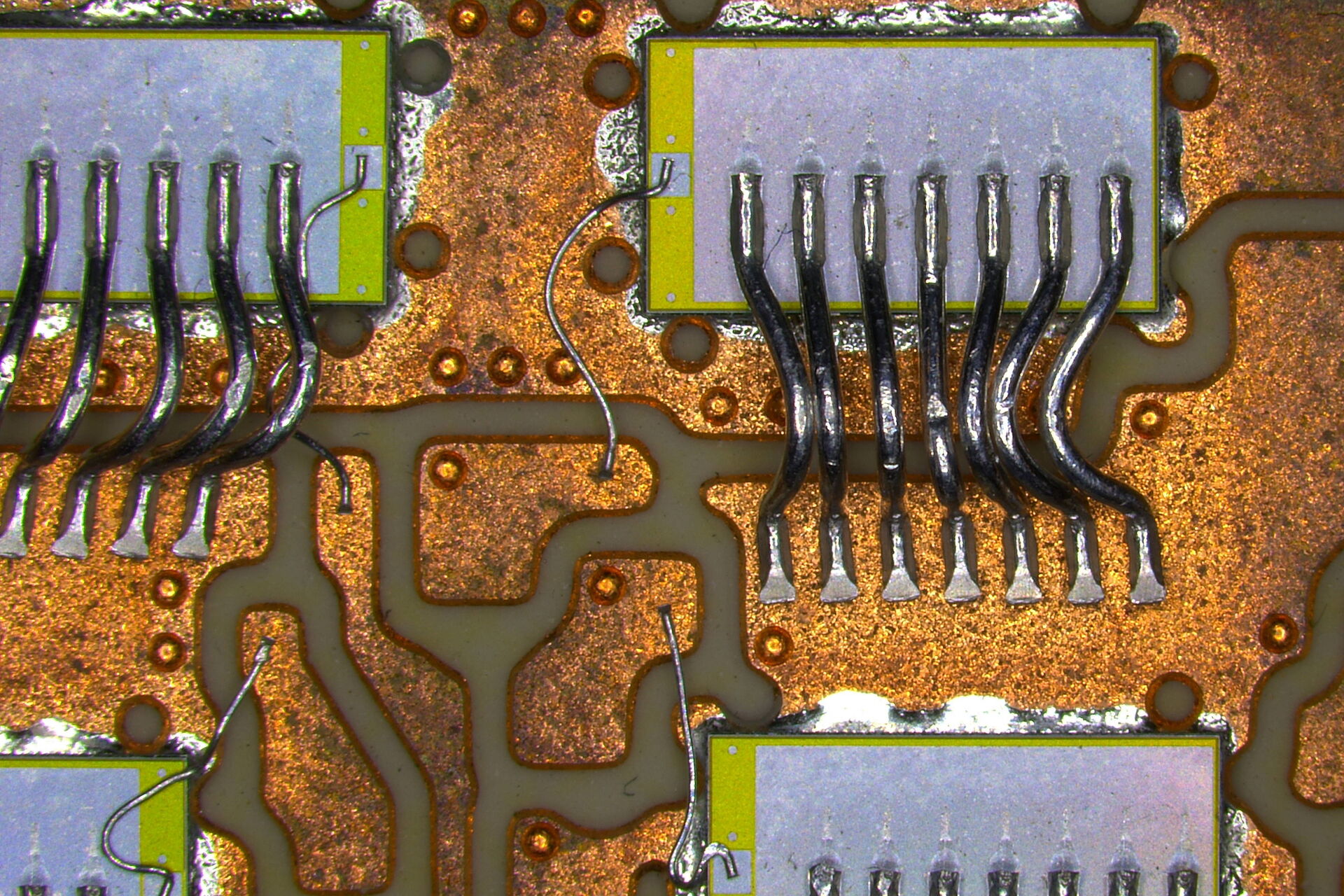
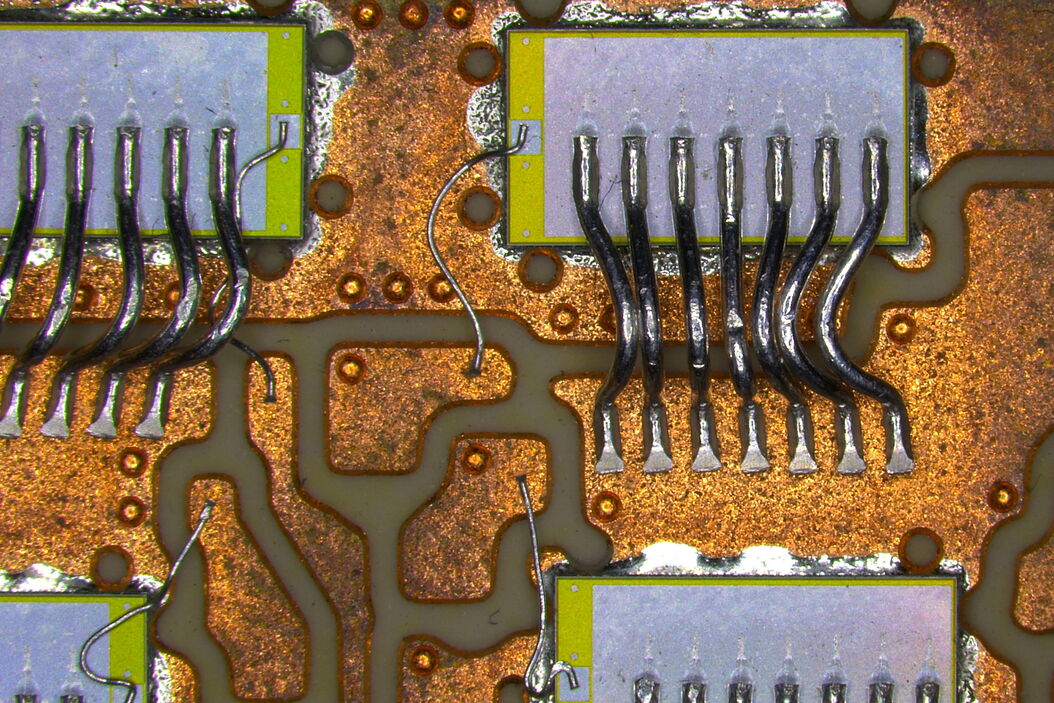
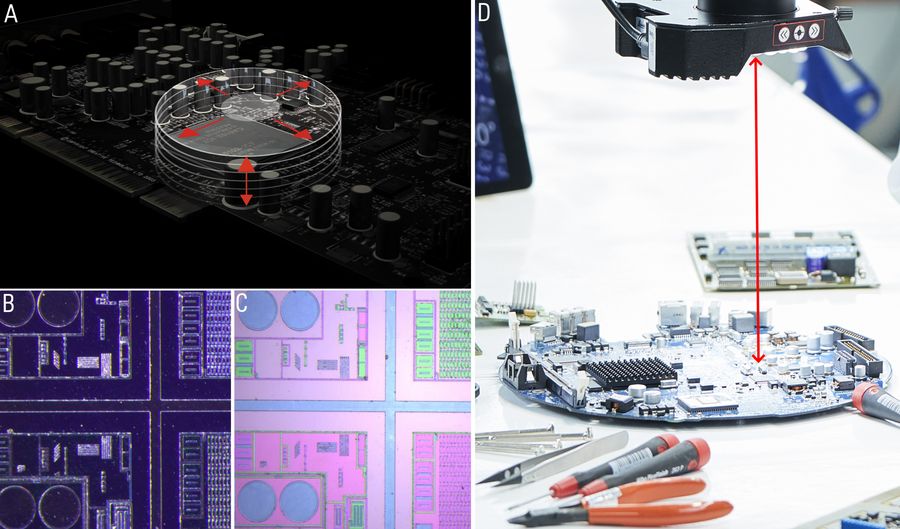
Using the wrong set of optical lenses and light illumination [1-3] may prevent the user from quickly shifting the view from sample overview (low magnification with large field of view and depth of field; refer to figure 1A) to seeing the fine details (higher magnification) without losing focus. When this is the case, additional adjustments are required in order to get a sharp image each time the magnification is changed. The illumination plays an important role as it can enhance different sample details during imaging (refer to figure 1B and C).
Too small working distance
The working distance of a microscope (refer to figure 1D) is the distance between the bottom of the objective lens and top of the sample [1]. Using a microscope objective with a short working distance can make it difficult for doing rework requiring access to the sample with tools or handling of the sample, especially when inspecting samples with features having large differences in height. The sample could touch the objective more easily, possibly resulting in damage, when inspecting with a short working distance.
Delay with the use of dedicated workstations
When performing sample measurements, analysis and/or comparison to standard references, it is sometimes necessary to transport samples and notes across workstations to perform dedicated inspection tasks. This workflow can lead to possible waiting/idle time if the workstations are occupied. If there is manual image data transfer between inspection workstations, e.g. using mobile media like USB and SD cards, the media can be misplaced or even lost in the process, thereby leading to delays and reduced inspection efficiency.
Difficulty to operate the microscope
Complex microscope operations may require special training for users to become proficient. Making sure each user possesses the proper skill level to perform the operation is important and often requires additional training time, especially when there is a large variation in the initial user-skills level. Non-intuitive microscope and software packages can slow down user training and decrease productivity.
Inability to quickly adapt to new inspection needs
Inspecting different samples, such as printed circuit boards, electronic assemblies, automotive parts and components, or medical devices, often requires a different microscope setting (objectives, illumination, etc.). A complex and inflexible microscope solution can limit the user’s ability to quickly adapt it their needs and the type of sample they want to inspect.
Cumbersome reporting of results
When reporting and sharing of results (i.e., image analysis, data, and reports), they must be easily accessible to others in order to maintain an efficient workflow. However, when using dedicated workstations for this task, sharing of information between users may become difficult and slow, due to waiting when trying to access a workstation or the manual transfer of data, which results in decreased productivity.
Risk of strain and injury to users during inspection
Sample inspection with a microscope is often times a slow process which can take hours due to repetitive tasks. Reproducing the same motions over long periods of time can cause discomfort and strain on the user, especially when using a microscope which is not ergonomically designed or does not provide ergonomic accessories.
Inspection with rework (stereo microscope)
For visual inspection with rework, then a 3D perspective with immediate depth perception is necessary, so a stereo microscope with eyepieces should be used. An example would be doing inspection and rework of electronic parts or printed circuit boards (PCB).
Cannot quickly scan samples during inspection and rework
An additional challenge encountered for inspection with rework which can cause inefficiency is the inability to quickly change the microscope settings allowing users to go from a sample overview to fine details. This challenge arises when using a stereo microscope which does not provide enough depth of field, field of view, and resolution, thus requiring a lot of adjustments.
Refer to table 1 for an overview of the challenges for visual inspection.
| Challenge Faced | Inspection Only and/or Inspection & Rework |
| Insufficient optics & illumination | both |
| Small working distance | both |
| Delay with dedicated workstations | both |
| Difficult to train users | both |
| Inability to adapt to needs | both |
| Cumbersome reporting | both |
| Risk of strain and injury | both |
| Slow scanning of samples for rework | Inspection & Rework |
Table 1: Overview of challenges encountered when doing inspection and rework which can lead to inefficiency.
Leica microscopes: Overcoming challenges
Digital and stereo microscopes from Leica Microsystems are solutions for visual inspection only or inspection with rework which can overcome the challenges mentioned above [4].
Inspection only solution
With the Emspira 3 digital microscope used in stand-alone mode, it offers integrated functionalities enabling measurement, comparison, and data sharing without the need of a computer.
Inspection and rework solution
With Ivesta 3 stereo microscopes, users can optimize their workflow and save time during inspection. They use the FusionOptics [5] technology which can increase inspection efficiency, enabling the microscope to provide both a large depth of field and high resolution.
With M series stereo microscopes, users can handle easily routine inspection or documentation tasks.
Ivesta 3 and M series stereo microscopes with a Flexacam c5 camera can also be used for inspection in stand-alone mode with integrated measurement, comparison, and data sharing functionalities.