This article discusses the 3 factors for determining the potential of a particle to cause damage to parts and components in the automotive and electronic industry. These factors include the measurement of particle reflectivity, height, and composition. Optical microscopy can be used to evaluate particle reflectivity and height, but a spectroscopic method like laser induced breakdown spectroscopy (LIBS) is needed for particle composition. A 2-methods-in-1 solution, combining microscopy and LIBS, helps users to determine a particle’s damage potential efficiently.
The following 3 factors determine the potential of a particle to cause damage:
1) Differentiating between reflective particles and non-reflective particles
Reflective particles (usually conductive, hard, metallic) often have a greater damage potential for automotive and electronic components compared to non-reflective particles (usually non-conductive, soft, non-metallic).
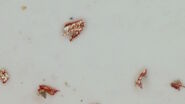
Metallic particles often have a shiny appearance (unless they have been oxidized or their surface covered by contaminants) which can be identified with optical characterization. This can be done visually by simply looking at the reflectivity of the particles. It can be more accurate to analyze the light-reflection intensity of the particles using specific states of polarized light.
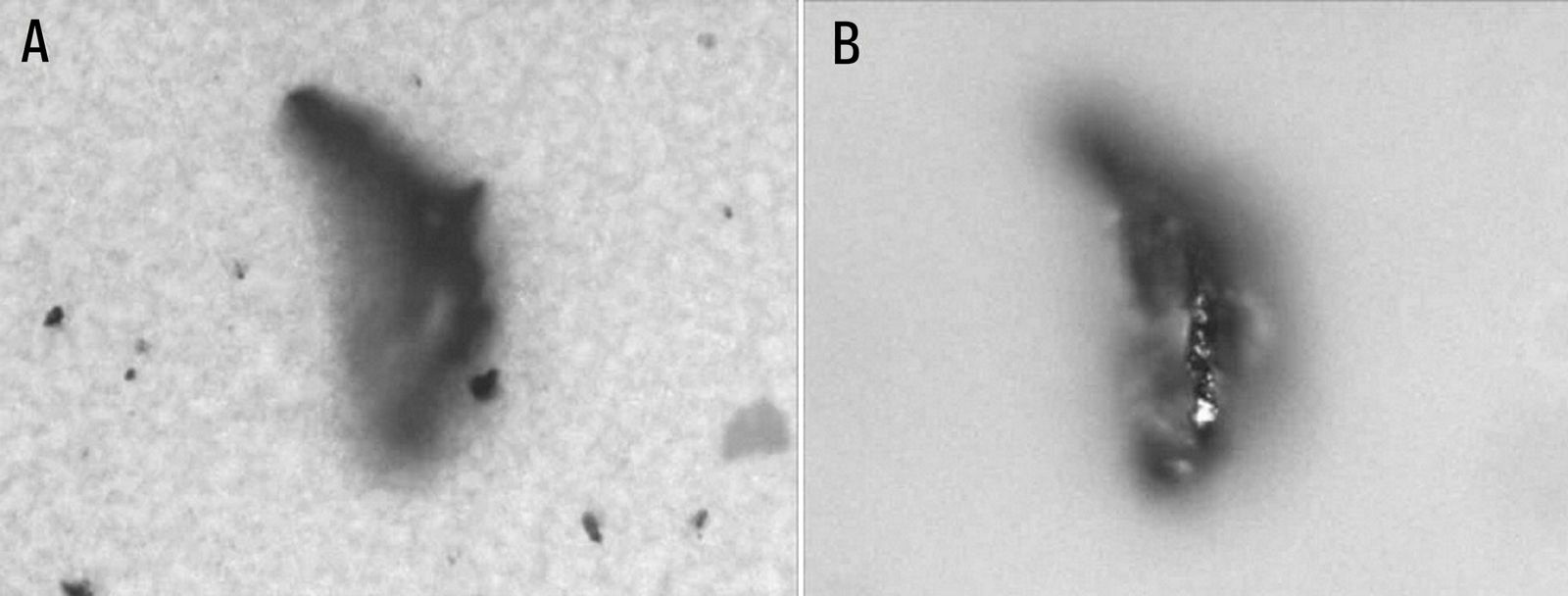
The ability to differentiate between reflective and non-reflective particles using an optical microscope is useful when trying to determine the damage potential of a particle [1,2] (refer to figure 1).

2) Measuring particle height
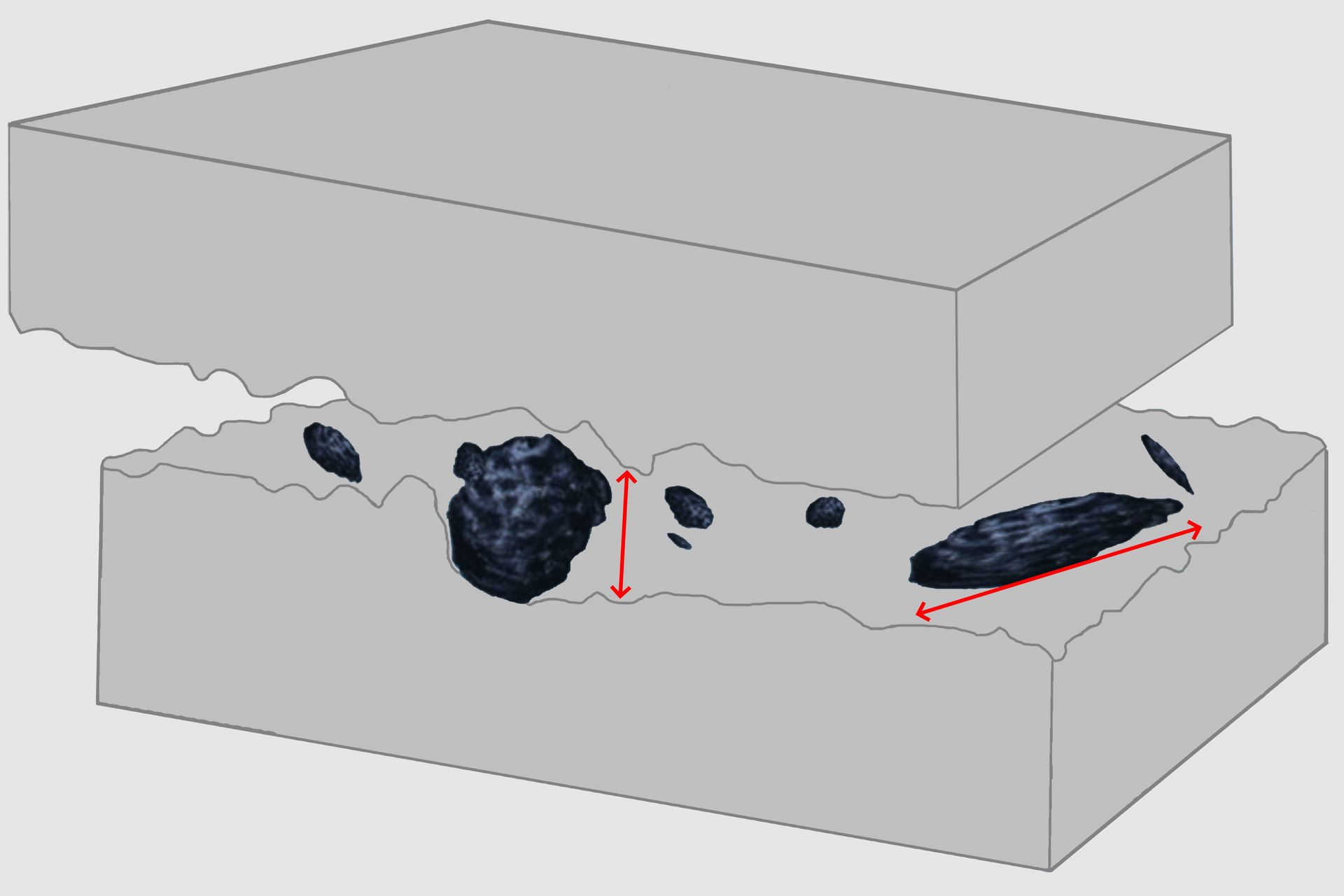
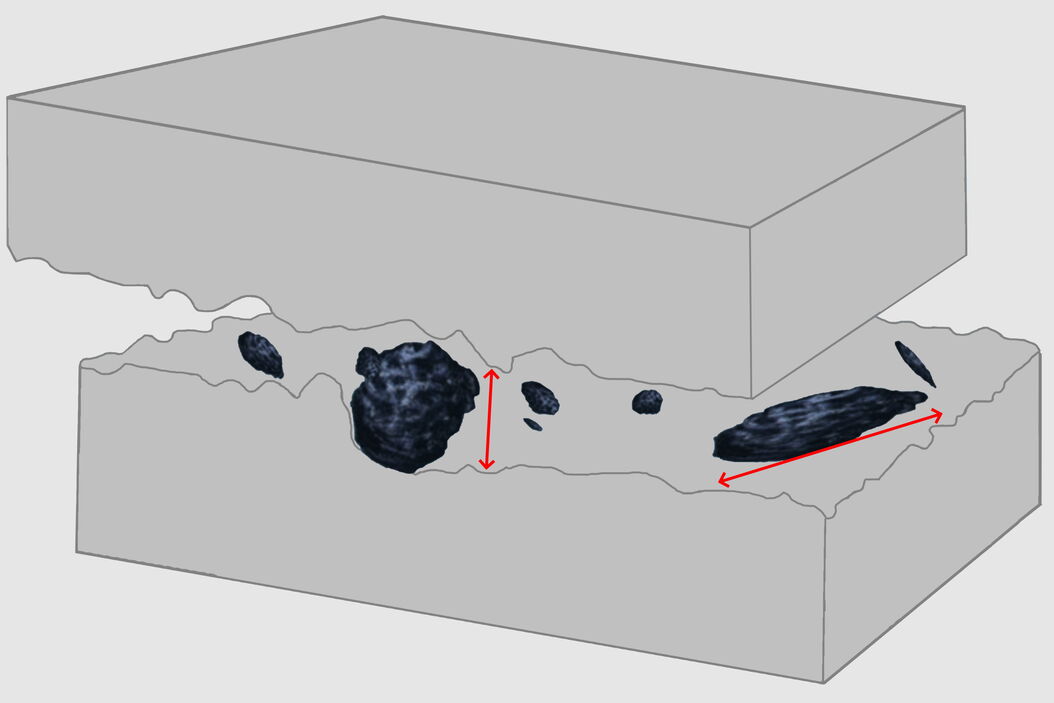
The particles’ dimensions and shape are very important in determining their damaging potential and they can be determined with good accuracy with a standard optical analysis. Under specific conditions, smaller particles with a certain height have a greater damage potential than large, flat ones.
The height (h) of a particle can be estimated using the depth of field (DF) of a microscope lens. DF depends on the numerical aperture (NA) of the lens according to: DF = 550/(NA)2. The height can be determined by the vertical difference between the focal planes at the top and bottom of the particle [1,2].
3) Knowing the particle composition
Hard particles (metallic, ceramic) are more abrasive than soft ones made of plastics and other organic materials. Moreover, large (>200 µm) metallic contaminants can cause electrical shorts which may damage electronic components.
Optical microcopy is a useful first approach for determining the damage potential of particles, however due to variations in optical appearance, roughness, and homogeneity, an extended analysis is usually needed to determine with certainty whether the particles are actually metallic or not.
An extended analysis involves the use of spectroscopic methods like laser induced breakdown spectroscopy (LIBS). LIBS enables an evaluation of the particle composition and can more accurately identify particles with a greater damage potential.

Solutions for cleanliness analysis
Leica cleanliness analysis solutions, based on optical microscopy and laser induced breakdown spectroscopy (LIBS), enable users to perform efficient and accurate analysis of particulate contamination on filters.
With a 2-methods-in-1 materials analysis solution combining optical microscopy and laser-induced breakdown spectroscopy (LIBS), users can determine both particle size and composition by achieving a seamless workflow using visual and chemical analysis simultaneously. This solution is also very useful when trying to determine the source of particle contamination [1,2].