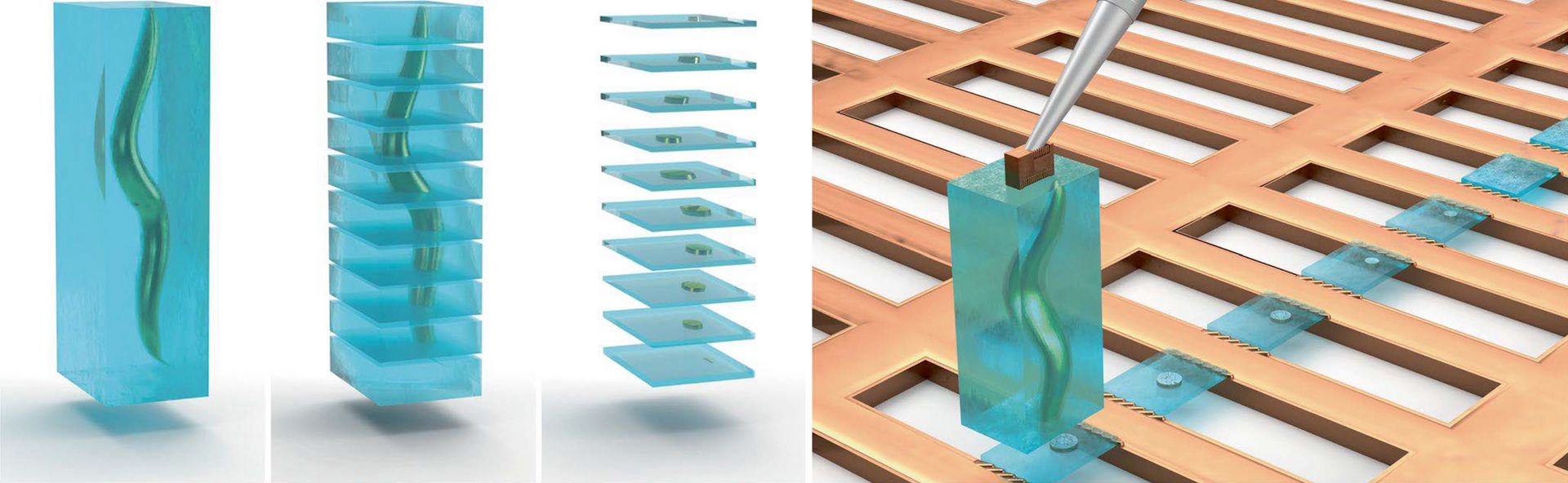
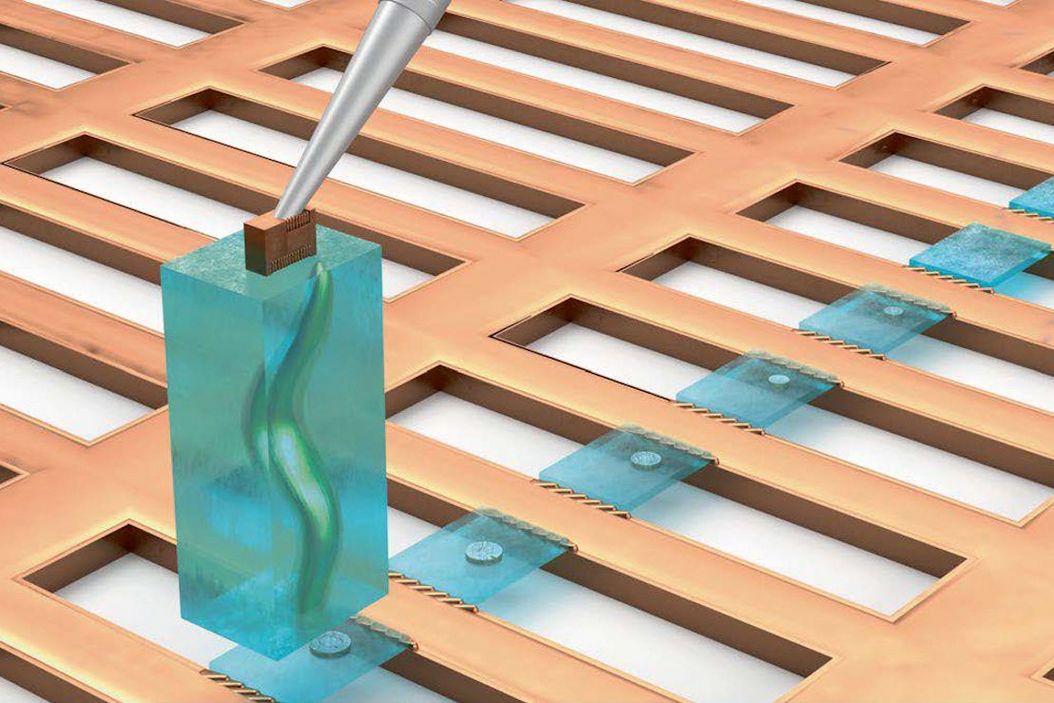
Serial Lift-Out workflow for cryo-ET lamella preparation - Schematic illustration of the Serial Lift-Out method applied to a vitrified biological sample (e.g., C. elegans larva) embedded in bulk vitreous ice (blue). Image courtesy: Prof. Dr. Jürgen M. Plitzko - doi.org/10.1038/s41592-023-02113-5.

Cryo-ET Sample Preparation: From Waffle Method to Serial Lift-Out

Free webinar on-demand: expert perspectives on high-pressure freezing (HPF) workflows for thicker and more complex cryo-ET samples

Serial Lift-Out workflow for cryo-ET lamella preparation - Schematic illustration of the Serial Lift-Out method applied to a vitrified biological sample (e.g., C. elegans larva) embedded in bulk vitreous ice (blue). Image courtesy: Prof. Dr. Jürgen M. Plitzko - doi.org/10.1038/s41592-023-02113-5. Serial_Lift-Out_workflow_for_cryo-ET_lamella_preparation.jpg

Summary

What happens when cryo-ET sample preparation needs to go beyond thin, easy-to-freeze specimens? This free on-demand webinar explores how high-pressure freezing can support cryo-electron tomography workflows for thicker, larger, or more complex biological samples.

Expert perspectives come together around practical workflow decisions — from vitrification and waffle preparation to correlative cryo targeting, on-grid lamella preparation, cryo-lift-out, serial lift-out, and autogrid-compatible approaches. The discussion highlights how sample assessment, region selection, handling after freezing, and downstream cryo-FIB milling can influence the path toward tomography.

Examples include tissues, organoids, multicellular organisms, C. elegans, yeast cells, Tetrahymena cells, and biopsies. Viewers can explore how HPF-enabled workflows are being adapted for different sample types and preparation goals, including approaches for accessing larger biological volumes and preparing multiple lamellae from selected sample regions.

Key learnings

  • Identify when HPF-enabled workflows become relevant for thicker, larger, or more complex cryo-ET samples that are difficult to address with standard preparation routes.
  • Compare workflow routes beyond waffle milling, including correlative cryo targeting, cryo-lift-out, serial lift-out, and autogrid-compatible HPF approaches.
  • Understand what to evaluate before milling, from sample distribution and region selection to workflow constraints that can influence downstream lamella preparation.
  • See how different expert perspectives connect, from practical HPF implementation to scalable lift-out strategies and tomographic analysis of complex biological samples.
  • Deepen your understanding of the waffle method by exploring how HPF-enabled cryo-ET workflows are applied, compared, and adapted in practice.

Introduction

Cryo-ET sample preparation becomes more demanding when specimens are thicker, larger, or more complex. This webinar brings together four perspectives on how high-pressure freezing can be connected with downstream cryo workflows, including waffle preparation, correlative cryo targeting, on-grid lamella preparation, cryo-lift-out, serial lift-out, and autogrid-compatible approaches.

Expert perspectives on HPF-enabled cryo-ET workflows: Why HPF matters for complex cryo-ET samples?

Cryo-ET sample preparation becomes more demanding when specimens are thicker, larger, or more complex than standard plunge-freezing workflows can reliably support. In this free on-demand webinar, expert perspectives show how high-pressure freezing can be connected with downstream cryo workflows for different sample types, preparation goals, and tomography requirements.

Serial Lift-Out workflow for cryo-ET lamella preparation - Schematic illustration of the Serial Lift-Out method applied to a vitrified biological sample (e.g., C. elegans larva) embedded in bulk vitreous ice (blue). Image courtesy: Prof. Dr. Jürgen M. Plitzko - doi.org/10.1038/s41592-023-02113-5.

From waffle preparation to workflow decisions

The webinar starts with the role of vitrification in preserving biological samples for electron microscopy and introduces high-pressure freezing with EM ICE in the context of thick and complex specimens. From there, the focus shifts to practical workflow decisions: how waffle preparation is handled in different lab settings, how cryo-light microscopy can support sample assessment before milling, and how on-grid lamella preparation compares with cryo-lift-out when targeting and sampling efficiency become important.

Serial lift-out and autogrid-compatible approaches

Serial lift-out adds another perspective by showing how larger biological volumes can be accessed and sectioned into multiple lamellae, helping retain more tissue context for downstream cryo-ET analysis. Autogrid-compatible high-pressure freezing approaches further address common handling challenges after freezing, especially when fragile grids need to remain protected for cryo-FIB milling and tomography.

Watch the webinar on-demand to see how vitrification, sample assessment, region selection, on-grid lamella preparation, cryo-lift-out, serial lift-out, and autogrid-compatible approaches can connect in HPF-enabled cryo-ET workflows — with examples including tissues, organoids, multicellular organisms, C. elegans, yeast cells, Tetrahymena cells, and biopsies.
Scroll to top